
Christmas Desserts for Restaurants: Festive Menu Ideas
Christmas desserts for restaurants: European classics, make-ahead prep, honest pricing, EU allergen rules and clear descriptions for international guests.
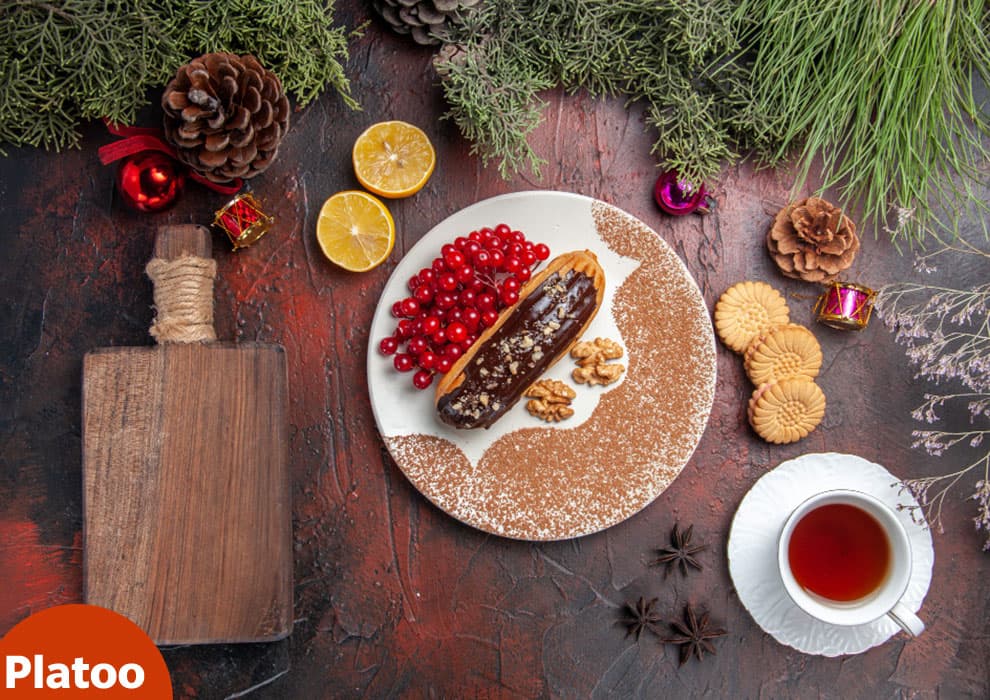
Imagine a Saturday in mid-December. Every table is full, a group of twelve wants dessert at the same moment, and the pastry section is still piping cream for a plate that takes six minutes to build. Nothing is wrong with the recipe. The problem is that it was designed for a quiet Tuesday.
That is the real challenge with Christmas desserts for restaurants. In December, guests who skip pudding the rest of the year order something warm, spiced or soaked in brandy, and tourists arrive hoping to taste the dessert that belongs to the city they are visiting. Demand goes up exactly when the kitchen has the least room.
So a festive dessert card has to work as a system, not a list of nice ideas: familiar dishes, fast plating, honest prices, clear allergens and words a visitor can follow. This guide takes those jobs one at a time.
Key takeaways
- Christmas desserts for restaurants need to feel familiar enough to order without explanation and still run smoothly on the busiest nights of the year.
- Building the festive dessert menu on a few shared prep bases, such as a spiced sponge, a custard, a caramel and a ganache, lets the menu grow while the workload barely does.
- Make-ahead prep moves much of December’s pastry work into November, when the kitchen still has room to breathe.
- A dessert dressed up for the season should not keep its old price, and guests must be able to see any of the fourteen major allergens before they order.
- One or two well-made vegan and gluten-free options serve mixed tables better than a long list of substitutions on request.
What Should Christmas Desserts for Restaurants Deliver in December?
They should taste of the season and arrive without fuss. Festive desserts have to do two jobs at once: feel familiar enough to order without explanation, and run smoothly on the busiest nights of the year.
Miss the first job and plates come back half-eaten. Miss the second and a full Saturday stalls at the pass behind one complicated plate.
Tradition first, twist second
Most guests arrive with a picture of dessert already in mind. For British and Irish diners, it is often Christmas pudding. In France and Belgium, it is the bûche de Noël.
A recognisable classic gives a hesitant guest a safe choice and tells the room that the kitchen takes the season seriously. Creativity works best on top of that foundation: a lighter pudding, a bûche filled with local fruit, one spice borrowed from a neighbouring tradition.
A recognisable classic is the safest choice on the menu; the twist is what guests remember afterwards.
Where dessert sits in a festive cover
A Christmas set menu or prix fixe usually ends with a fixed dessert course that goes out to dozens of covers within minutes. So ask of every candidate: can it be portioned in advance and plated quickly? A festive, consistent, fast plate does more for December service than an ambitious one that slows the pass.
Traditional European Christmas Desserts Tourists Look For
A visitor who walks into a café in Vienna, Lyon or Kraków in late December usually knows what they want before sitting down. Eurostat’s monthly figures on nights spent in EU tourist accommodation show how much of that December traffic reaches your own city or ski resort.
Tourists rarely want a generic “festive” cake; they want the one dessert that belongs to the place they are visiting. The desserts below are the names guests type into their phones and look for on menus.
Which Christmas desserts are traditional in Germany, Italy and France?
Stollen in Germany, panettone in Italy and the bûche de Noël in France, each with a strong regional identity.
Stollen is a dense yeast loaf with dried fruit, candied peel and often a marzipan core, finished with butter and a thick coat of icing sugar. Some regional names, such as Dresdner Christstollen and Nürnberger Lebkuchen, are tied to their home cities. Before you print one of them, check the European Commission’s eAmbrosia register, which shows whether a name carries geographical protection. Lebkuchen and the smaller, peppery Pfeffernüsse also work well as a plate of biscuits with coffee.
Panettone traditionally comes from Milan. An Italian ministerial decree sets out what may be sold under the name, which is one reason guests expect a tall, light, butter-rich dome rather than a heavy fruit loaf. Served warm with mascarpone cream, it fits almost any cuisine.
The bûche de Noël, shaped like a Yule log, is the classic in France and Belgium: a rolled sponge with chocolate or chestnut cream, scored to look like bark. In Provence, Christmas Eve traditionally ends with the thirteen desserts (treize desserts), a spread of dried fruit, nuts, nougat and small breads rather than a single cake.
British and Irish classics: pudding, mince pies and sticky toffee
Christmas pudding is traditionally made on Stir-up Sunday, the last Sunday before Advent, and left to mature for weeks. Guests from the UK and Ireland expect it dark and rich, served with brandy butter or custard, and sometimes flamed at the table.
Mince pies are the smaller, faster-moving item: short pastry filled with spiced dried fruit, sold singly or in threes. Sticky toffee pudding is not strictly a Christmas dish, but it appears on many winter menus. It is a useful answer for guests who find Christmas pudding too heavy.
Spain, Poland, Greece and Romania: turrón, makowiec, melomakarona, cozonac
Southern and eastern Europe bring textures that northern menus often lack. Turrón, Spain’s almond nougat, comes hard or soft and crumbly; the Jijona and Alicante names are closely linked to their towns. Poland’s makowiec is a yeast dough rolled around a dark poppy-seed filling and served on Christmas Eve.
Greek melomakarona are soft spiced cookies soaked in honey syrup and topped with walnuts. Romanian cozonac is a sweet bread filled with walnuts, cocoa or Turkish delight, baked for both Christmas and Easter.
| Dessert | Country | What guests expect |
|---|---|---|
| Stollen | Germany | Fruit loaf, marzipan, icing sugar |
| Panettone | Italy | Tall, light, buttery sweet bread |
| Bûche de Noël | France, Belgium | Rolled sponge shaped like a log |
| Christmas pudding | UK, Ireland | Dark, matured, brandy butter |
| Turrón | Spain | Almond nougat, hard or soft |
| Makowiec | Poland | Poppy-seed roll |
| Melomakarona | Greece | Honey-soaked walnut cookies |
| Cozonac | Romania | Filled sweet bread |
| Risalamande | Denmark | Cold rice-and-almond pudding |
What is risalamande and how do Nordic restaurants serve it?
Risalamande is a Danish rice pudding folded with whipped cream and chopped almonds, served cold with warm cherry sauce. One whole almond is hidden in the bowl, and whoever finds it wins a small prize.
The game is also what can slow service, so restaurants often keep it for larger tables and serve individual glasses to everyone else.
Festive Dessert Menu Ideas: 12 Christmas Desserts for Restaurants
A December dessert list has to cover three moments: the plated finish after a main course, the board shared by a table of eight, and the small sweet with coffee. That does not mean a lot of new recipes.
The most workable festive desserts share a few prep bases — a spiced sponge, a custard, a caramel, a ganache — so a Christmas dessert list grows while the workload barely does. Each base is made in bulk once and reappears in two or three dishes.
Plated desserts with a seasonal twist
The bûche de Noël (Yule log) remains the obvious centrepiece and plates well as a single slice with chestnut or clementine ice cream. Sticky toffee pudding does the same job for British and Irish guests, and its toffee sauce doubles as a topping elsewhere on the menu.
Panettone is more useful as an ingredient than as a slice. Turn it into a bread-and-butter pudding with the same custard used for the Yule log filling, and you have a hot dessert with almost no extra prep. A gingerbread cheesecake and a spiced poached pear complete a plated section that suits a Christmas set menu or a prix fixe dessert course.
Sharing platters and dessert boards
A dessert sharing platter solves a familiar December problem: a large group too full for a plate each that still wants something sweet. The format has an old precedent. In Provence, the thirteen desserts are traditionally served on Christmas Eve as a set of small sweets, according to restaurantware.com — dried fruit, nuts, nougat and fougasse laid out together.
A restaurant dessert board can borrow the idea with fewer items: slices of stollen, gingerbread biscuits, chocolate bark, candied citrus and a small pot of toffee sauce for dipping.
Petits fours, dessert wine and coffee pairings
Petits fours let guests end the meal without committing to a full dessert. Mini mince pies, florentines, truffles made from the cheesecake’s ganache and thin squares of panforte cover most tastes.
Add a short pairing line — a sweet white, a tawny port, a vin santo, plus espresso or a spiced coffee — and staff have an easy suggestion ready when a table hesitates.
| # | Dessert | Format | Shared base |
|---|---|---|---|
| 1 | Bûche de Noël (Yule log) | Plated | Sponge, custard |
| 2 | Sticky toffee pudding | Plated | Caramel |
| 3 | Panettone bread-and-butter pudding | Plated | Custard |
| 4 | Gingerbread cheesecake | Plated | Spiced biscuit, ganache |
| 5 | Spiced poached pear | Plated | Spiced syrup |
| 6 | Dessert board | Sharing | Several of the above |
| 7 | Stollen slices | Sharing | — |
| 8 | Chocolate bark with candied citrus | Sharing | Ganache |
| 9 | Mini mince pies | Petit four | Pastry |
| 10 | Florentines | Petit four | Caramel |
| 11 | Chocolate truffles | Petit four | Ganache |
| 12 | Panforte squares | Petit four | Spiced syrup |
Twelve items look generous, but only five or six bases sit behind them.
Which Christmas Desserts Can You Make Ahead?
The best candidates are rich, fruit-heavy bakes such as stollen, Christmas pudding, fruitcake and mince pies, plus frozen desserts that sit ready until service. Make-ahead dessert prep moves much of December’s pastry work into November, when the kitchen still has room to breathe.
According to restaurantware.com, stollen, Christmas pudding and fruitcake can be made weeks before service because they keep well and mature over time. According to Bar & Kitchen magazine, frozen sundaes and no-soak puddings suit tight festive schedules because they can be prepared in advance and finished in minutes.
How far in advance can you make stollen, pudding and mince pies?
Christmas pudding comes first, usually several weeks ahead. Many kitchens steam a batch in late November and reheat portions to order.
Stollen typically keeps for up to several weeks when tightly wrapped, helped by its coating of butter and sugar. Mince pies are more flexible. The mincemeat can be made well in advance, while the pastry cases taste best baked close to service, or frozen raw and baked off in small batches through the evening.
A simple rule covers most cases: anything that relies on dried fruit, spice and alcohol can be made early, while anything that relies on crisp pastry or fresh cream should be finished late.
A three-week prep calendar for the pastry section
A short calendar gets the long-keeping bakes out of the way before the busiest weeks. Treat it as a starting point and adjust the timings to your own recipes and fridge space. Our guide to restaurant kitchen organisation covers prep lists, labelling and storage.
- Week one: make and steam the Christmas puddings, prepare the mincemeat and bake any fruitcakes.
- Week two: bake the stollen, wrap and store it; make ice-cream bases, sauces and crumbs for frozen sundaes.
- Week three: roll, fill and freeze mince pie cases, portion the puddings, and prepare the components of no-soak puddings so they only need assembling on the night.
By peak December service, the pastry section is mostly reheating, baking off and plating.
How Should You Price a Christmas Dessert Menu?
Price each festive dessert from the cost of the plate upwards, not from what the café across the square charges. Chestnuts, candied fruit, good chocolate and spirits all cost more than everyday staples, so last year’s prices rarely fit December.
How do you calculate food cost for a festive dessert?
According to the standard costing formula, food cost percentage is ingredient cost per portion divided by net selling price, where “net” means the price after VAT is removed. Count everything on the plate: the garnish, the sauce and the brandy in the cream. Small extras are where margins quietly disappear.
Illustrative example (all figures are hypothetical)
A slice of chocolate-chestnut log costs €2.10 in ingredients and sells for €9.00 net of VAT. Its food cost is 2.10 ÷ 9.00, or about 23%. Add a €0.60 spoonful of cinnamon cream and sugared cranberries without changing the price, and food cost climbs to 2.70 ÷ 9.00, or 30%.
The most common December mistake is dressing a dessert up for the season while leaving its price where it was. Before the Christmas dessert menu goes to print, check each dessert against the menu pricing methods that protect your margin and set a target food cost for the whole section.
Should desserts be in the set menu, a trio or à la carte?
Usually all three, each costed on its own terms. In a Christmas set menu, the prix fixe dessert course is part of a single price; cost it alongside the starter and main, as you would for a New Year’s Eve set menu.
A trio of miniature desserts needs more labour and components per plate, so price the work, not just three small portions. A dessert sharing platter or board suits groups; price it per person or per board, and decide in advance how many guests one board serves.
À la carte desserts give guests choice. They also show you which festive items actually sell, which is useful information for next year’s set menu.
Which Allergens Do Christmas Desserts Contain, and What Does EU Law Require?
Almost every classic festive dessert contains several regulated allergens, and guests must be told about them even when the dish is baked in-house. According to Regulation (EU) No 1169/2011, Annex II lists 14 substances or products causing allergies or intolerances, and Article 44 extends the duty to provide allergen information to non-prepacked food, including restaurant dishes. If a Christmas dessert contains any of the 14, your guests must be able to find that out before they order.
Member states set some of the detail on presentation; for the full picture, see what EU law requires for the 14 allergens on your menu.
Nuts, gluten, eggs, milk and sulphites: the usual suspects
Festive baking draws on the same pantry everywhere: butter, flour, eggs, almonds, candied peel. According to Annex II, nuts, cereals containing gluten, eggs and milk are all among the 14 allergens, and between them they turn up in most traditional Christmas desserts.
| Dessert | Allergens it usually contains |
|---|---|
| Stollen | Gluten, milk, eggs, nuts (almonds, marzipan); possibly sulphites |
| Panettone | Gluten, eggs, milk; possibly sulphites |
| Mince pies | Gluten, milk; possibly sulphites |
| Turrón | Nuts, eggs |
| Melomakarona | Gluten, nuts (walnuts) |
Sulphites hide inside ingredients. Raisins, currants and candied peel are often preserved with them, and according to Annex II point 12, sulphur dioxide and sulphites must be declared when present above 10 mg/kg or 10 mg/litre, expressed as SO2. Check supplier specification sheets instead of assuming.
Garnishes catch kitchens out in the same way. A hazelnut dusting or a marzipan decoration changes the allergen list of a dessert that looks simple.
Do you have to declare alcohol in desserts?
Not as an allergen. Alcohol is not one of the 14 substances in Annex II, so the regulation does not require you to declare it the way it does nuts or milk.
It still matters to guests. Rum in a pudding or brandy in mince-pie filling is relevant to anyone who avoids alcohol or is choosing for children, so many kitchens mention it in the description anyway.
In a digital menu such as Platoo, for example, each dish can carry its ingredients, the 14 EU allergens and an estimated preparation time, so a December dessert gets the same allergen record as the rest of the menu. There is more on showing allergens clearly on a digital menu in our guide.
How Do You Describe Christmas Desserts for International Guests?
Keep the dessert’s original name, then add one plain line in the guest’s language saying what it is and how it is served. A dessert guests can understand is a dessert they can choose with confidence.
According to CSA Research’s 2020 “Can’t Read, Won’t Buy” study, a majority of consumers prefer to buy when product information is in their own language. Eurostat’s monthly figures on nights spent in EU tourist accommodation show December demand holding up in city and winter destinations, so many guests reading your dessert list will not share your language. Our guide covers what restaurants lose when tourists can’t read the menu.
Keep the local name, explain it underneath
Translating “stollen” as “fruit bread” throws away what the visitor came for. The name is the attraction; the explanation makes it safe to order.
| Name only | Name plus explanation |
|---|---|
| Stollen | Stollen: German fruit loaf with marzipan, dusted with icing sugar |
| Panettone | Panettone: tall Milanese sweet bread with candied orange and raisins |
| Makowiec | Makowiec: Polish yeast roll with sweet poppy seed filling |
| Melomakarona | Melomakarona: Greek honey-soaked biscuits topped with walnuts |
Multilingual dessert descriptions for tourists work best when they are short and concrete; our guide to writing dish descriptions that sell in every language covers tone and length.
In a digital menu such as Platoo, for example, the menu is translated automatically into the languages the venue enables, and every translation can be edited by hand, so a chef can restore “makowiec” if the machine renders it literally. The menu opens in the language of the guest’s phone, and the guest can switch it.
To see how a translated dessert list looks on a guest’s phone, open an example menu, no sign-up needed.
Should Christmas dessert menus show photos?
Yes, for the desserts guests are least likely to recognise. A makowiec slice, with its dark poppy-seed spiral, explains more in a picture than in a sentence; a familiar chocolate cake needs it less. Photograph the dessert as it is actually plated, so what reaches the table matches the screen.
Vegan, Gluten-Free and Alcohol-Free Christmas Desserts
December menus lean on butter, flour, eggs and spirits. Most traditional festive sweets, from stollen and panettone to mince pies, turrón and melomakarona, contain several major allergens at once (see the allergen section above).
One or two well-made vegan and gluten-free Christmas desserts on the card serve mixed tables better than a long list of substitutions on request. They also spare the kitchen from improvising during the busiest weeks of the year.
Which festive desserts adapt easily without eggs, dairy or gluten?
Desserts built on fruit, spice, rice or nuts adapt most easily, because flour and butter never did the main work, which is why most good vegan Christmas desserts start there. Enriched doughs such as stollen or panettone are the hardest to convert, since the butter and eggs are the dessert.
| Dessert | Easy swap | What to watch |
|---|---|---|
| Gingerbread | Plant butter; flax or aquafaba instead of egg | Gluten-free flour makes it more crumbly |
| Risalamande | Oat milk and plant-based cream | Almonds remain a nut allergen |
| Poached pears in spiced syrup | Free of eggs, dairy and gluten as is | Wine syrups contain alcohol |
| Turrón | Often naturally gluten-free | Nuts, sometimes egg white |
Alcohol needs separate attention, even though it is not a declared allergen (see the allergen section above). Guests who avoid it for religious or health reasons will ask, and so will parents. Flag rum-soaked fruit, brandy butter or wine syrup on the menu, and keep one alcohol-free option to save staff trips to the kitchen.
Take-Away Gift Boxes and Whole-Cake Pre-Orders
December trade does not end with the last seated cover. A guest who enjoyed a slice of stollen at lunch often wants something to carry to a family table, a host or an office party.
According to restaurantware.com, dessert gift boxes and whole-cake pre-orders extend festive dessert revenue beyond seated covers into take-away. The kitchen is already baking these items in volume, so a box or a whole cake is mostly a packaging and scheduling question, not a new recipe.
Pre-orders work best with a fixed collection window and a cut-off date announced well ahead, so the pastry team plans bakes instead of guessing. A named pick-up slot or a deposit cuts no-shows on the busiest days.
What sells best in a Christmas dessert gift box?
Items that travel and keep well: gingerbread biscuits, a whole or half stollen, a boxed panettone, and small batches of truffles or florentines. Delicate desserts built on mousse, fresh cream or ice cream belong on the dining menu, not in a take-away box.
Label each box with its contents and storage advice, and add a short ingredient list buyers can pass on to the people receiving the gift.
When to Launch and Retire Your Christmas Dessert Menu
With Christmas desserts for restaurants, timing decides whether the festive menu pays for itself. Launch too late and you miss the weeks of office parties and early visitors; keep it too long and stollen sits awkwardly beside January salads. The safest window opens with Advent and closes only when your guests’ own festive calendar does, which is not always 25 December.
From Advent to Epiphany: key dates by country
In Britain, Christmas pudding production starts well before launch. In France the season runs longer: galette des rois is traditionally eaten around Epiphany on 6 January, and in Spain the roscón de reyes belongs to the same date. Tourist venues can keep one or two desserts into early January for visitors who arrive after the 25th.
Switching dessert menus without reprinting
- In late November, prepare the festive dessert section with descriptions and allergens checked.
- Go live at the start of Advent and hide items as they sell out.
- After Epiphany, return to the regular desserts and keep any bestseller as a winter special.
With printed cards, each of those steps means a reprint. In a digital QR menu such as Platoo, for example, venues can prepare several menus in advance and switch to the right one when needed; changes go live straight away, and the printed QR code stays the same. The menu appears on the guest’s phone, but Platoo doesn’t take orders or payments; staff do.
A good first step this week: list your planned desserts, mark which can be made in November, and check each one’s allergens and price. For the wider routine, read how to update seasonal dishes, prices and availability.
Get your festive dessert menu ready
Create a free Platoo account, add your Christmas desserts with their descriptions and allergens, and switch to the festive menu at Advent without reprinting the QR code.
Start for freeRelated reading
Frequently Asked Questions
Restaurants most often list a mix of plated and shareable items: a chocolate Yule log, sticky toffee pudding, warm panettone, mince pies, gingerbread cheesecake and a board of biscuits or truffles. A good rule for owners is to pair one national classic guests recognise with one plated dessert and one small sweet to go with coffee.
There is no single answer; the most traditional dessert changes at every border. French guests think of the bûche de Noël, Germans of stollen, Italians of panettone, the British of Christmas pudding, Spaniards of turrón, Poles of makowiec and Greeks of melomakarona. If your city has its own classic, put it first on the list.
Chilled and frozen desserts are the easiest to make a day or two ahead: tiramisu, panna cotta, semifreddo and baked tarts all hold well once set. Semifreddo can wait in the freezer for several days. Keep them covered and portioned, so on the night staff only add sauce, fruit or a dusting of spice.
Yes. A dessert baked in-house needs the same allergen information as any other dish served in the EU. In practice, check every component, including garnishes and dried fruit that may contain sulphites, and make sure the menu or a member of staff can answer a guest’s question before the order goes to the kitchen.
Charge a price that sits in line with the other desserts on your menu, so the festive option feels special without looking out of place. Before fixing the figure, cost every seasonal extra, from chestnuts and good chocolate to spirits and garnishes, so the higher ingredient bill is covered rather than quietly absorbed.
A dairy-free chocolate and chestnut torte is a reliable choice: it slices cleanly, keeps in the fridge and still feels like a celebration. For something lighter, offer spiced poached pears or a sorbet bombe. Ask suppliers about glazes and decorations, and tell guests plainly on the menu which desserts are fully vegan.