
The 14 Allergens on Your Menu: What EU Law Requires
EU law requires information on the 14 allergens for food served in restaurants and cafés. Here is what to declare, in what form, and how to show it.
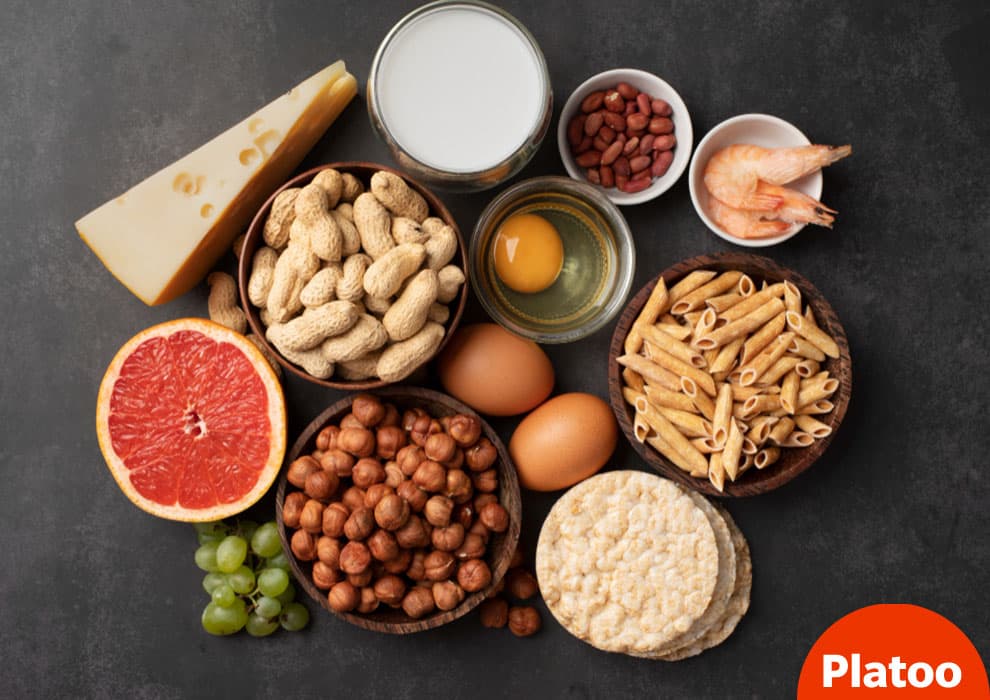
Typical scenario: a tourist in a busy seaside café points at the dessert of the day and asks whether it contains nuts. The server pauses, glances toward the kitchen and says she thinks it is fine. The answer lives in her memory, and that memory was formed during a rushed briefing weeks ago. For the guest, that pause is the whole problem.
European rules were written to close exactly this gap. Regulation 1169/2011 names 14 allergens that every kitchen must be able to declare, and unless a country has set its own rules, that information is expected in writing, visible before anyone has to ask. Here is what the law requires and where kitchens most often slip.
Key takeaways
- The legal list in Annex II of Regulation 1169/2011, not a chef’s instinct, decides which allergens a kitchen must be able to declare.
- If a listed allergen is still in the dish when it reaches the table, the guest has a right to know, however much cooking has changed it.
- Without national rules of its own, the Commission’s guidance is that allergen information must be written, easily visible and clearly legible.
- An icon or number code without the written allergen name is not a complete declaration.
- The business serving the dish answers for its allergen information, not the supplier, the menu designer or the software.
What Are the 14 Allergens Under EU Law?
Under EU law, the 14 allergens are the substances listed in Annex II of Regulation 1169/2011, and that list, not a chef’s instinct, decides what a kitchen must be able to declare.
Annex II of Regulation (EU) No 1169/2011 names 14 substances or products causing allergies or intolerances. According to the Commission’s 2017 guidance notice, this list of the 14 allergens rests on scientific opinions adopted by the European Food Safety Authority (EFSA). Article 21(2) requires the Commission to systematically re-examine it and update it by delegated acts where necessary.
| Point | Allergen | Scope |
|---|---|---|
| 1 | Cereals containing gluten | Wheat, rye, barley, oats, spelt, kamut, hybrids |
| 2 | Crustaceans | Including derived products |
| 3 | Eggs | Eggs from all farmed birds |
| 4 | Fish | Including derived products |
| 5 | Peanuts | Including derived products |
| 6 | Soybeans | Including derived products |
| 7 | Milk | Including lactose |
| 8 | Nuts | Eight named species (see below) |
| 9 | Celery | Including derived products |
| 10 | Mustard | Including derived products |
| 11 | Sesame seeds | Including derived products |
| 12 | Sulphur dioxide and sulphites | Above 10 mg/kg or 10 mg/litre, as total SO2 |
| 13 | Lupin | Including derived products |
| 14 | Molluscs | Including derived products |
Which nuts and cereals count, and which do not?
What are the 14 allergens in practice? Two entries are closed lists. Cereals containing gluten means wheat, rye, barley, oats, spelt and kamut, their hybridised strains and products thereof. The nuts entry is limited to eight named species: almonds, hazelnuts, walnuts, cashews, pecans, Brazil nuts, pistachios and macadamia (Queensland) nuts. The Commission notice describes that list as exhaustive. A nut outside those eight is not a point 8 allergen.
Peanuts have their own entry. The notice also defines milk as milk from the mammary gland of farmed animals, and egg as eggs from all farmed birds, not only hens.
Sulphur dioxide and sulphites are the only entry with a threshold: they must be declared above 10 mg/kg or 10 mg/litre in terms of total SO2, calculated for the product as ready for consumption.
What is exempt from Annex II?
The annex carves out a handful of specific derivatives. Wheat-based glucose syrups and maltodextrins are exempt, as are fully refined soybean oil and fat. So are fish gelatine or isinglass used as fining agents in beer and wine. Lactitol is exempt, as are cereals, whey and nuts used to make alcoholic distillates.
The exemptions are narrow: soybean oil that is not fully refined is not covered, so check the exact product description before treating an ingredient as exempt.
What Regulation 1169/2011 Requires From Restaurants and Cafes
A plate of pasta carries no label, yet since 13 December 2014 what goes into it has been a legal matter. That is the date from which Regulation (EU) No 1169/2011 on the provision of Food Information to Consumers (FIC) applies, under Article 55. Much of it concerns packaged food, but several articles reach into kitchens.
The European Commission puts it plainly: allergen information is mandatory for non-prepacked food, including food served in restaurants and cafes.
17.3%
Lifetime self-reported food allergy in Europe, pooled estimate
Nwaru et al., Allergy 2014
0.9%
Food allergy confirmed by food challenge in the same review
Nwaru et al., Allergy 2014
19.9%
Lifetime self-reported food allergy in an updated review of 110 studies
Spolidoro et al., Allergy 2023
0.8%
Positive food challenge in the 2023 review
Spolidoro et al., Allergy 2023
Staff cannot tell which guest has a confirmed allergy, so allergen information on restaurant menus has to be accurate for everyone.
Does a restaurant count as a mass caterer?
Yes. Article 2(2)(d) defines a mass caterer as any establishment, including a vehicle or a fixed or mobile stall, that prepares food ready for consumption by the final consumer. The regulation names restaurants, canteens, schools, hospitals and catering enterprises as examples.
The definition says nothing about size. A hotel breakfast room, a neighbourhood cafe and a seasonal beach kiosk all fall within it.
Articles 9, 44 and 14 in plain language
Article 9(1)(c) sets out the mandatory allergen particulars: any ingredient or processing aid listed in Annex II, or derived from one, that is used in preparing a food and is still present in the finished product, even in altered form. If an Annex II allergen goes into a dish and is still there when the plate reaches the table, the guest is entitled to know.
Article 44(1)(a) carries that duty over to non-prepacked food offered to the final consumer or to mass caterers, food packed at the consumer’s request and food prepacked for direct sale. That covers the plated main course, the sandwich wrapped at the counter and the cake boxed that morning for the display case. Article 44 also leaves room for national measures on how the information is provided.
Article 14(1) and (2) deal with distance selling, which includes delivery and online orders. For non-prepacked food sold this way, allergen information must be available before the purchase is concluded and again at the moment of delivery, at no extra cost to the customer.
Must Allergen Information Be Written, or Can Staff Tell Guests?
It depends on where you trade. Unless your country has adopted its own rules, the European Commission’s reading is that allergen information for non-prepacked food must be written down, easily visible and clearly legible, not something guests have to ask for. Where national measures exist, verbal information may be allowed instead.
That split comes from Article 44(2) of Regulation 1169/2011, which lets Member States adopt national measures on the means through which allergen information is made available and on its form of expression and presentation. Countries have used that room differently, so the answer varies across the EU.
What the Commission Notice 2017/C 428/01 says
The Commission set out its interpretation in Commission Notice 2017/C 428/01 on allergen information. Point 30 says that, in principle, all means are allowed for non-prepacked food: a label, other accompanying material, modern technology tools or verifiable oral information.
Point 31 adds the condition that matters most. In the absence of national measures, the information must be provided in written form, easily visible and clearly legible, and it cannot be given only upon request. Spoken information is therefore an option national law has to open up, not the default.
| Situation | Written information | Verbal information |
|---|---|---|
| Where no national measures exist | Required (Commission Notice, point 31) | Not enough on its own |
| Where national measures allow it | Accepted | May be permitted, on terms set nationally |
| Can the guest see it unprompted? | Yes, if easily visible and clearly legible | No, the guest has to ask |
Why ‘just ask your server’ is rarely enough on its own
Even where national rules permit oral information, the Commission’s wording refers to verifiable oral information. A server’s answer is only as reliable as what that person knows at that moment, and a new starter covering a busy Saturday shift may not know what went into today’s special.
That is why staff allergen training matters whichever route your country takes, and why it works best when staff have a written source to check against.
In practice, many operators treat allergen information on restaurant menus as the baseline and staff conversation as the follow-up. Before relying on verbal information alone, check what your national authority has adopted under Article 44.
National Rules: How Ireland, Germany, Spain and France Apply Article 44
The EU regulation makes allergen information for non-prepacked food mandatory, but Article 44 lets each member state decide how it reaches the guest. Those Article 44 national measures are where the real differences sit. Some countries insist on written allergen information; others accept verbal information, provided something is written down behind it.
France adopted its own measure, Décret n° 2015-447, generally read as requiring restaurants to provide allergen information in writing. Check the exact display rules in the current text before designing a menu around them.
| Country | Legal basis | Written information | Oral information |
|---|---|---|---|
| Ireland | S.I. No. 489 of 2014 (as updated by S.I. No. 656 of 2024) | Required, before the sale, without the guest asking | Not enough on its own |
| Germany | LMIDV §4 | Signs, menus, price lists, notices or electronic information | Allowed with a written or electronic record and a visible notice |
| Spain | Real Decreto 126/2015, Article 6.5 | Recorded in writing or electronically on site | Allowed before purchase, at no extra cost, with signs saying where to ask |
| France | Décret n° 2015-447 | Generally required | Check the current decree text |
Ireland: written information before the guest orders
Ireland takes one of the strictest lines of the four. Under S.I. No. 489 of 2014, updated by S.I. No. 656 of 2024, allergen information for non-prepacked food must be in written form, in English (or in Irish and English), and easy to find before the sale. The guest should not have to ask for it.
The Food Safety Authority of Ireland also rejects blanket statements such as “some dishes contain allergens”. It expects information per dish, along the lines of “spaghetti bolognaise – contains milk, celery, wheat”.
Germany and Spain: oral information backed by a written record
Germany’s LMIDV §4 gives businesses a menu of options. Allergens can appear on signs on or near the food, on menus or price lists, on a notice in the premises, or in written or electronic form, as long as a notice explains how to reach the electronic version.
Oral information is permitted too, but only under conditions. It has to be given before purchase by the owner or trained staff, a written or electronic record must exist and be available to inspectors and to guests on request, and a visible notice must tell customers that information is given verbally.
Spain follows a similar logic. Real Decreto 126/2015, Article 6.5, allows information by other means, including spoken, if it is accessible before purchase at no extra cost, recorded in writing or electronically on site, and signposted so guests know where to ask.
In Ireland, Germany and Spain alike, the spoken answer a server gives must come from a written source that already exists.
What about the UK after Brexit?
The UK is no longer in the EU, but many operators work on both sides of the Channel. The Food Standards Agency accepts verbal allergen information only when a clearly visible written notice tells customers how to get it. Its guidance adds that written information, supported by a conversation with staff, works best.
Where the 14 Allergens Hide: Sauces, Stocks, Garnishes and Drinks
Most allergen errors are not in the dish name. They sit in components a kitchen makes once and uses everywhere: the stock, the house dressing, the crumb on top.
Article 9(1)(c) of Regulation 1169/2011 anticipates this. If one of the 14 allergens went into any component of the plate, it has to be declared, however much cooking has changed it.
Do wine, beer and cocktails need allergen information?
Yes, and the bar is a common blind spot. Sulphites count above the threshold in the section 1 table. Most beer is brewed from barley or wheat.
When wine goes into a dish, the Commission’s 2017 guidance notice (point 19) gives the model wording “wine (contains sulphites)”, with “sulphites” emphasised. For bespoke cocktails, Ireland’s FSAI expects allergens to be communicated directly to the guest before the sale is concluded.
Hidden sources kitchens often miss
Of the 14 allergens under EU law, cereals containing gluten (wheat, rye, barley, oats, spelt and kamut) turn up in roux-thickened gravies, soy sauce, malt vinegar and stock cubes. Mustard sits in vinaigrettes, mayonnaise and marinades. Milk, including lactose, appears in butter finishes, some spice blends and glazes.
Fish is easy to overlook in Worcestershire sauce, Caesar dressing and South-East Asian fish sauce. Celery is common in stocks, soups and the celery salt on a Bloody Mary rim, a drink that also carries fish through its Worcestershire sauce.
Typical scenario
A bistro lists “grilled chicken, herb dressing” and declares nothing. The dressing is finished with Dijon mustard and a splash of white wine, and the chicken was brined with a stock cube containing celery and wheat. The wine may also count, if the sulphite level in the finished dish exceeds the threshold. Up to four allergen groups reach the plate, none of them visible in the name.
Garnishes need the same check: toasted seeds, croutons, a drizzle of pesto. Recipe cards listing every sub-component help, as does writing dish descriptions that name the ingredients guests react to.
Before the next menu change, it is worth tracing each sauce, stock and drink back to its own ingredient list.
How to Show Allergens on a Menu: Words, Icons, Codes and ‘Contains’ Lines
Once you know which dishes carry which allergens, the next question is how to put that on the page. Regulation 1169/2011 says little about menu design, but what it does say rules out some popular shortcuts.
The starting point is Article 9(2) of Regulation 1169/2011: mandatory particulars must be expressed in words and numbers, and pictograms or symbols may be used only in addition. For allergen information on restaurant menus, that means the allergen’s name has to appear in writing.
Are allergen icons enough on their own?
No. A wheat-ear or fish symbol beside a dish is useful shorthand, but an icon or number code without the written allergen name is not a complete allergen declaration under EU law. Codes such as “1, 7, 12” only make sense to a guest when a key spells out each allergen in words.
Article 21 also shapes the wording. Where a food has an ingredients list, the allergen must be emphasised by font, style or background colour, for example in bold. Where there is no ingredients list, which is the usual case on a menu, the format is the word “contains” followed by the substance’s name as listed in Annex II, as in “Contains: milk, celery”.
There is one exemption. If the name of the food clearly refers to the allergen, such as “cheese” or “cream” for milk, no separate indication is needed, as the Commission Notice explains in point 23.
| Format | Meets the words requirement on its own? | What to add |
|---|---|---|
| Icons or pictograms | No | Written allergen names alongside |
| Number or letter codes | No | A key naming each allergen in words |
| ‘Contains’ line with allergen names | Yes | Nothing |
| Allergen matrix or chart with named columns | Yes | Clear link to each dish |
Legibility and language: making allergen notes readable for every guest
Correct allergen labelling still fails if guests cannot read it. Article 13(1) requires mandatory food information to be marked in a conspicuous place, easily visible, clearly legible and not hidden, obscured or interrupted by other matter. A pale footnote in tiny type, or a code key tucked onto the back of a laminated card, sits uneasily with that wording.
Language is the second test. Under Article 15(1), the information must appear in a language easily understood by consumers in the Member State where the food is sold. Article 15(2) lets Member States require one or more official EU languages, and Article 15(3) confirms nothing stops a business from giving the particulars in several languages.
For venues in tourist areas, that leaves room to add an English or German line under the local-language one. The local requirement comes first; extra languages are a courtesy that helps a visitor read “contains nuts” before the plate arrives.
How Do You Show Allergens on a Digital or QR Code Menu?
A digital or QR code menu can carry allergen information just as a printed one can, provided guests can reach it and it matches what the kitchen serves. For non-prepacked food, EU law sets the duty and largely leaves the medium to the venue and to national rules.
Is a QR code menu a valid way to give allergen information?
In principle, yes. Point 30 of the Commission’s guidance notice 2017/C 428/01 lists modern technology tools among the allowed means.
National rules can add conditions. Under Germany’s LMIDV §4(3), electronic information must come with a notice explaining how to access it. A table card pointing guests to the allergen details is a sensible habit anywhere.
Going digital does not settle the question of written allergen information vs verbal information. Some guests have no phone or no battery, so a printed copy remains the fallback, with briefed staff to answer questions. Tourist venues should also think about translating allergen notes into your guests’ languages.
Keeping allergen data current when recipes or suppliers change
Under Article 8(2), the food business operator responsible for the food must ensure that its information is present and accurate, on screen or on paper. That food business operator responsibility does not pass to a software tool, and no menu format guarantees compliance on its own. The usual weak point is a quiet change: a new brand of stock or a swapped garnish.
- Treat every recipe or supplier change as a possible allergen change until the product specification has been checked.
- Update the dish’s allergen record before the changed dish is served.
- Bring the printed fallback and the staff briefing into line with the digital menu.
- Keep a dated note of what changed and who checked it.
In Platoo, for example, changes to prices and dishes go live straight away, and the printed QR code stays the same. Platoo’s own guide walks through marking the 14 allergens on every dish of a digital menu.
Cross-Contamination: When Is a ‘May Contain’ Warning Needed?
A ‘may contain’ warning is needed when a real, assessed risk of cross-contact remains after reasonable kitchen controls, not as a blanket disclaimer on every dish. EU law treats it as voluntary information, so the judgement sits with the food business operator.
Under Article 36(2)-(3)(a) of Regulation 1169/2011, information on the possible and unintentional presence of allergens must not mislead, must not be ambiguous and should be based on relevant scientific data. This precautionary allergen labelling is separate from the mandatory allergen declaration: an allergen that is in the recipe must be declared, never hidden behind ‘may contain’.
A ‘may contain’ line describes a specific risk you have assessed; it is not a substitute for controlling that risk. Printed on everything, it tells an allergic guest nothing and narrows their choice for no reason.
Shared fryers, boards and oil: realistic kitchen controls
Most cross-contact happens in predictable places. Fryer oil is shared between battered fish and chips, one board serves bread and salad, a ladle moves between sauces, a nut garnish is scattered across the pass.
Separate equipment, colour-coded boards, cleaning between preparations and a fixed order of work all reduce the risk. In a small kitchen they rarely remove it entirely.
Where the risk cannot be controlled, the UK Food Standards Agency’s allergen guidance for food businesses advises telling customers that an allergen-free dish cannot be provided, and not making gluten-free claims. A clear refusal is more useful to a guest than a vague warning.
If cross-contamination cannot be controlled, the honest answer is that an allergen-free dish cannot be provided.
Free-from and gluten-free claims on a menu
‘Gluten-free’ and ‘very low gluten’ are regulated statements. As the Commission notice on allergen information explains, they are governed by Commission Implementing Regulation (EU) No 828/2014, so using them on a menu is a legal claim rather than a description.
Such a claim does not replace the allergen declaration either: where the dish contains a cereal that must be declared, it still has to be named. And a gluten-free label on chips cooked in the same oil as battered fish contradicts itself.
If the fryer is shared, the safer course is to say so plainly and leave the claim off the menu.
An Allergen Compliance Checklist for Your Menu
The risky moment is usually change: a new supplier, a swapped sauce, a dish adapted on a busy evening.
Who is responsible if allergen information is wrong?
Under Article 8(2) of Regulation 1169/2011, the responsible food business operator must ensure the presence and accuracy of food information. In practice, the business serving the dish answers for its allergen information, not the supplier, the menu designer or the software that displays it.
The ten-point checklist before your next menu change
- Keep an allergen matrix listing every dish against all 14 allergens.
- Record allergens per component, sauces and drinks included.
- Check supplier specifications when a product changes.
- Update the matrix before a new dish reaches the pass, not after.
- Confirm the national rules in each country where you operate.
- Show written allergen information without guests having to ask, unless national rules allow verbal.
- Train staff to use the matrix, not memory.
- Compare recipe cards with menu wording.
- Date each version of the matrix and keep old ones.
- Re-check any “may contain” wording against real kitchen practice.
For layout, check what a compliant restaurant menu template must include. According to its pricing page, Platoo’s free plan covers one venue and one menu with unlimited dishes, photos, allergens and one QR code. Starting a digital allergen menu on the free plan keeps the written record in one place. None of this is legal advice, and no tool guarantees compliance.
Related reading
Frequently Asked Questions
Yes. Under Regulation (EU) No 1169/2011, restaurants and cafes must give guests information on any allergen from Annex II present in the food they serve. The law does not insist that every detail sits on the printed menu itself, but the information must be accurate, easy to find and available when guests choose what to order.
Sometimes, depending on the country. Article 44 lets Member States decide how information on non-prepacked food is provided, so Germany and Spain accept oral information backed by a written record available on request. Ireland requires it in writing. Where verbal information is allowed, staff should be able to show that written record straight away.
No. Article 9(2) of Regulation 1169/2011 requires mandatory particulars to be expressed in words and numbers, so icons may only be used in addition to the written allergen name. Unfamiliar symbols are easy to misread. Name the allergen in words, in the local language, wherever an icon appears.
Yes, when they contain a regulated allergen. Wine with sulphites above 10 mg per litre, expressed as SO2, must be declared, and cocktails can carry egg, milk, nuts or gluten through liqueurs, syrups and foams. Treat the drinks list like the food menu and record every component, including house-made mixers.
No. The list of allergens and the duty to inform guests are set at EU level, but Article 44 lets each Member State decide how information on non-prepacked food is provided, including written versus oral formats. Before opening a venue or changing your menu format, check the guidance from your national food safety authority.
It can. EU guidance accepts any means of providing allergen information, including modern technology tools, provided it is accurate, easy to access and in a language guests understand. Because some countries require written information in a specific form, check national rules and keep a printed alternative for guests who cannot scan the code.
Sources: Regulation (EU) No 1169/2011 on the provision of food information to consumers (consolidated text) — EUR-Lex · Commission Notice 2017/C 428/01 on the provision of information on substances or products causing allergies or intolerances — EUR-Lex · Food information to consumers: legislation — European Commission · Nwaru B.I. et al. (2014). Prevalence of common food allergies in Europe: a systematic review and meta-analysis. Allergy · Spolidoro G.C.I. et al. (2023). Frequency of food allergy in Europe: an updated systematic review and meta-analysis. Allergy · Allergen information for non-prepacked food — Food Safety Authority of Ireland · Lebensmittelinformations-Durchführungsverordnung (LMIDV), § 4 — Germany · Real Decreto 126/2015 — Boletín Oficial del Estado, Spain · Allergen guidance for food businesses — Food Standards Agency, GOV.UK