
Nutrition Declaration on EU Menus: When It’s Required
Is a nutrition declaration required on EU restaurant menus? What Regulation 1169/2011 asks, when a menu claim triggers it and how to show calories correctly.
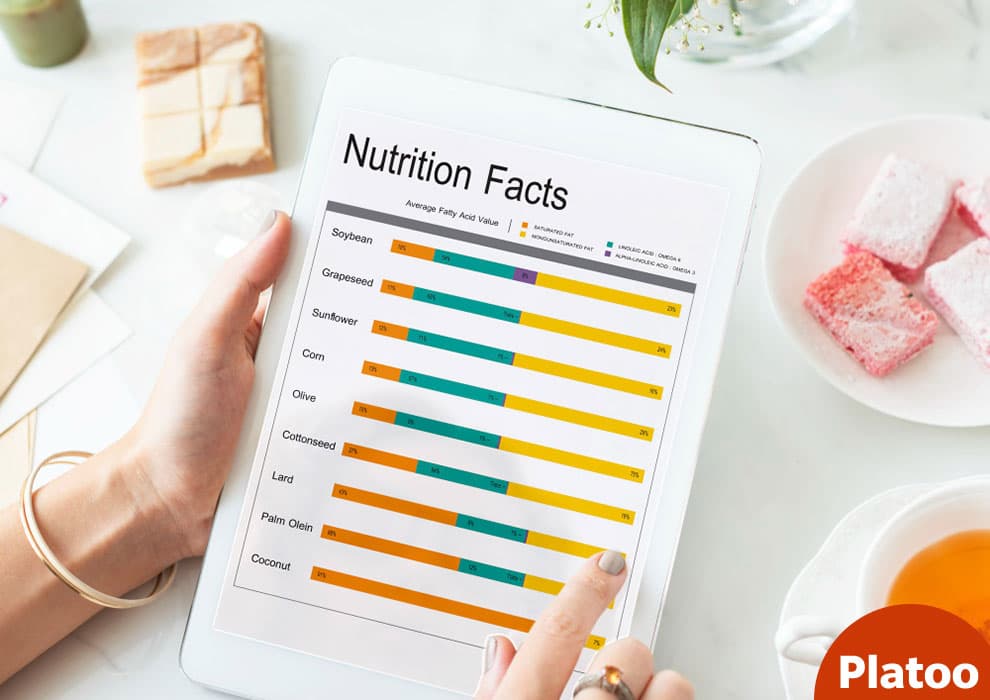
Most restaurant owners in the EU know that allergen information is compulsory. Far fewer are sure about calories, fat or salt. The nutrition declaration is the standard panel of figures printed on supermarket packaging, and the question of whether a menu must carry one comes up whenever a venue adds a healthy section, starts selling sealed snacks or simply wants to print energy values next to its dishes.
The short answer is that an ordinary restaurant dish is usually exempt. The longer answer depends on what you sell, how you describe it and which country you trade in. This article sets out what EU law requires, where the exemptions end and how to show figures without creating a compliance problem.
Key takeaways
- For non-prepacked food such as restaurant dishes, EU law makes only allergen information mandatory, unless a Member State adds national rules or the menu makes a nutrition claim.
- Sealed products made for the shelf rather than the counter count as prepacked food and carry the same labelling duties as a supermarket brand.
- A nutrition claim such as “low fat” or “high protein” on a menu dish is likely to bring a duty to provide nutrition information, even though the dish would otherwise be exempt.
- Voluntary calorie figures are still regulated, because once you print a number the legal rules on content, order, units and format apply.
- A rough guess printed as a precise number is a bigger risk than leaving calories off altogether.
What Is a Nutrition Declaration Under EU Law?
It is a fixed panel of seven values, energy plus six nutrients, laid out in a prescribed order, units and format. Regulation (EU) No 1169/2011 on Food Information to Consumers (FIC) lists a nutrition declaration among the mandatory particulars in Article 9(1)(l).
The timing was staggered. The Regulation applied from 13 December 2014, but mandatory nutrition labelling only took effect on 13 December 2016. During that two-year gap, Article 54(2) required any declaration given voluntarily to comply with Articles 30 to 35 anyway.
Whether it is mandatory or voluntary, the declaration follows the rules on content, order, units and layout in Articles 30 to 35.
The seven values, their order and units
Article 30(1) defines the mandatory content: the energy value and the amounts of fat, saturates, carbohydrate, sugars, protein and salt. These are often called the “big 7”. Annex XV then fixes the sequence and the units, so energy always comes first and salt always comes last.
| Position | Value | Unit |
|---|---|---|
| 1 | Energy | kJ / kcal |
| 2 | Fat | g |
| – | of which saturates | g |
| 3 | Carbohydrate | g |
| – | of which sugars | g |
| 4 | Fibre (voluntary) | g |
| 5 | Protein | g |
| 6 | Salt | g |
Under Article 32(2), energy and nutrient amounts are expressed per 100 g or per 100 ml. On prepacked food, Article 33 allows a per-portion figure in addition to that basis. The exception that matters for menus, per-portion figures on their own, is covered later in this article.
Layout is regulated too. Article 34 requires the values to appear in one field of vision, in tabular format with the numbers aligned if space permits. Where it does not, a linear format, with values running in a single line of text, is acceptable.
What can be added to the declaration voluntarily?
Article 30(2) lets you supplement the mandatory seven with a limited list: mono-unsaturates, polyunsaturates, polyols, starch, fibre, and vitamins or minerals present in significant amounts. Nothing outside that list belongs in the declaration itself.
Additions are not tacked on at the end. Annex XV gives each one its own slot, which is why fibre sits between sugars and protein in the table above. Annex XIII Part A defines when a vitamin or mineral reaches a “significant amount”.
Do Restaurants Need a Nutrition Declaration on the Menu?
No, not under EU law alone. A restaurant, café or hotel serving dishes at the table or over the counter does not have to print a nutrition declaration on its menu. The only particular that EU law makes mandatory for this kind of food is allergen information. Calories and nutrients become compulsory only where your country’s rules require them, or where the menu makes a nutrition claim, covered below.
Prepacked vs non-prepacked: the line that decides
Regulation (EU) No 1169/2011, the Food Information to Consumers (FIC) Regulation, treats food in two different ways. Prepacked food, such as a sealed yoghurt or a factory-made boxed sandwich, carries the full set of labelling particulars. The European Commission notes that nutrition information is required on most prepacked processed foods.
Non-prepacked food follows a separate rule, Article 44. It covers food offered to final consumers or mass caterers without prepackaging, food packed on the sales premises at the consumer’s request, and food prepacked for direct sale. A mass caterer, under Article 2(2)(d), is any establishment where food is prepared to be ready for consumption by the final consumer. The Regulation names restaurants, canteens, schools, hospitals and catering enterprises, and includes vehicles and fixed or mobile stalls. Cafés and hotel restaurants sit in the same group.
| Aspect | Prepacked food | Non-prepacked food (Article 44) |
|---|---|---|
| Typical examples | Packaged processed products | Plated dishes, counter food, food packed at the customer’s request, food prepacked for direct sale |
| Allergen information | Mandatory | Mandatory (Article 9(1)(c)) |
| Nutrition declaration | Mandatory on most products | Not required by EU law; only if a national measure requires it |
| Who sets the details | The Regulation | The Regulation plus each Member State |
Why allergens are mandatory on menus but calories are not
Article 44(1) makes information on the 14 allergens listed under Article 9(1)(c) the one compulsory particular for non-prepacked food. The Commission’s overview of the FIC rules says it directly: allergen information is required for non-prepacked foods, including in restaurants and cafés. For the detail, see what EU law requires for the 14 allergens on your menu.
Everything else, nutrition information included, is left to national governments. For a plated dish, EU law requires allergen information; whether calories are also required is a national decision. Under Article 44(1)(b) and 44(2), Member States may adopt national measures requiring some or all of the other particulars for non-prepacked food, and may decide how that information is presented. In practice, calorie posting on menus is a national question rather than an EU-wide one.
That is why two venues in different EU countries can face different obligations under the same Regulation. The Regulation does not list which countries have used this option, so check with your national food authority before assuming you are exempt, and confirm whether any rule applies to your type of venue.
Where no national measure exists, calories on the menu are optional. Showing them voluntarily is still allowed, but it brings its own conditions, and a venue selling prepacked items alongside plated dishes should check each product line separately.
When a Café, Bakery or Hotel Does Need Full Nutrition Labelling
What triggers full labelling is the packaging, not the kind of business. A plate served at the table, a croissant handed over the counter and a sandwich wrapped at the customer’s request all fall under Article 44 of Regulation (EU) No 1169/2011. For that food, the EU-level duty is allergen information; a nutrition table becomes mandatory only if your country adds it or you make a nutrition claim.
Article 2(2)(d) defines a mass caterer as any establishment preparing food ready for the final consumer, such as restaurants, canteens and catering enterprises. Cafés and hotel kitchens qualify, but the status does not cover everything they sell. Once a venue sells sealed products made for the shelf rather than for the counter, those products are prepacked food and carry the same labelling duties as a supermarket brand.
Even then, Annex V removes the obligation for some products: single-ingredient unprocessed foods, herbs and spices, salt, tea and coffee products, waters, food additives, chewing gum, and packs whose largest surface is under 25 cm². A bag of roasted beans or a bottle of water on the counter needs no nutrition table.
Does the small-quantities exemption cover homemade jams and cookies?
Often, yes. Annex V point 19 exempts food, including handcrafted food, supplied directly by the manufacturer in small quantities to the final consumer, or to local retail establishments that sell directly to the final consumer. A bakery jarring its own jam for the counter, or supplying cookies to the deli next door, is the case this point was written for.
The Regulation does not define “small quantities” or “local”, so interpretation is left to national authorities and can differ between countries. The exemption also lifts only the nutrition table: the ingredient list, allergen emphasis and other prepacked labelling still apply.
Bought-in packaged goods, own-brand jars and the hotel shop
Packaged goods bought from a manufacturer already carry the full label. Keep it intact: split a multipack or repack the product, and the obligations move to you.
Own-brand products are harder. Jars filled by a contract producer under the hotel’s name, sold in the lobby shop or online, sit far from point 19, because the hotel is not the manufacturer supplying small local quantities. Expect to need full nutrition labelling on those.
Typical scenario
A hotel serves house granola at breakfast and sells the same granola in sealed branded bags in its shop. At EU level, the breakfast portion needs only allergen information. The bags are prepacked food and need the full label unless the hotel can show they qualify under point 19.
Can a ‘Low Fat’ or ‘High Protein’ Label on a Menu Trigger Nutrition Rules?
Yes, it can. Calling a dish “low fat” or “high protein” is a nutrition claim, and Regulation (EC) No 1924/2006 covers claims on unpacked food, including food supplied to restaurants and mass caterers (Article 1(2)).
Claims carry a duty of their own. Article 7 of that Regulation, as amended by Article 49 of Regulation 1169/2011, makes nutrition labelling mandatory for products bearing a nutrition or health claim, with the content set out in Article 30(1). Read together, these articles suggest that a claim on a non-prepacked dish is likely to bring a duty to provide nutrition information, even though the dish would otherwise be exempt. How strictly this is enforced for restaurant dishes is up to national authorities.
Claim thresholds restaurants use most
The Annex to Regulation 1924/2006 sets fixed conditions. A dish either meets them or the wording cannot be used.
| Claim | Condition |
|---|---|
| Low fat | Max 3 g fat per 100 g (solids) or 1.5 g per 100 ml (liquids) |
| Low sugar | Max 5 g sugars per 100 g (solids) or 2.5 g per 100 ml (liquids) |
| High protein | At least 20 % of energy from protein |
| Low energy | Max 40 kcal (170 kJ) per 100 g (solids) |
| Low sodium / salt | Max 0.12 g sodium, or salt equivalent, per 100 g or 100 ml |
These are not per-portion figures. Illustrative example: a large grain bowl can carry plenty of protein per serving and still miss the 20 % threshold if grains and dressing supply most of the calories. Without a recipe-level calculation, you cannot know which side of the line a dish sits on.
Where a nutrient is present only in trace amounts, Article 34(5) of Regulation 1169/2011 allows a statement such as “Contains negligible amounts of ...” close to the nutrition declaration.
Descriptive wording that is not a nutrition claim
“Grilled”, “steamed” or “served with seasonal vegetables” describe how a dish is made, not a nutritional property. Words such as “lean” or “protein-packed” imply one and deserve the same caution as the claims above.
A safe rule: describe ingredients and cooking methods, not nutrient content. Our guide to writing dish descriptions that sell without risky claims has practical phrasing. If a claim is central to your concept, such as a high-protein lunch range, treat it as a labelling project, not a copywriting choice.
Showing Calories Voluntarily: Format Rules You Still Have to Follow
Where no national rule or claim makes them mandatory, calories on a menu are optional, but once a figure appears, Regulation (EU) No 1169/2011 still shapes how it looks. Article 36 sets the baseline for all voluntary nutrition information: it must not mislead the consumer, must not be ambiguous or confusing, and should rest on relevant scientific data where appropriate. Voluntary does not mean unregulated: the moment you print a number, the format rules for that number apply.
Dishes plated in your kitchen are not prepacked food, and neither is food packed on the premises at the guest’s request, since Article 2(2)(e) excludes both. For such food, Article 30(5) allows a slimmed-down version: the energy value alone, or energy plus fat, saturates, sugars and salt. Nothing obliges you to list carbohydrate, protein or fibre.
8 400 kJ / 2 000 kcal
Energy reference intake for an average adult
Regulation (EU) No 1169/2011, Annex XIII Part B
70 g
Total fat reference intake
Regulation (EU) No 1169/2011, Annex XIII Part B
90 g
Sugars reference intake
Regulation (EU) No 1169/2011, Annex XIII Part B
6 g
Salt reference intake
Regulation (EU) No 1169/2011, Annex XIII Part B
Can you show calories per portion only?
Yes, in this situation. Article 33(3) says that in the Article 30(5) case the figures may be expressed per portion or per consumption unit alone, without the per 100 g or per 100 ml values that Article 32 otherwise expects. That suits calorie posting on a menu: a guest wants to know what the burger contains, not what 100 g of it contains.
The condition sits in Article 33(1) and 33(4). The portion must be easily recognisable and quantified, and that quantity must appear in close proximity to the figures. As an illustrative example, “Chicken Caesar salad (350 g) — 520 kcal” works; “520 kcal” next to a dish served in varying sizes is harder to defend. Different lunch and dinner portions need separate figures.
How do you write the reference intake statement?
Some venues add a percentage, such as “26% of the reference intake”, to give the number context. Article 32(5) permits this, but only alongside a fixed statement: “Reference intake of an average adult (8 400 kJ/2 000 kcal)”. Annex XIII Part B adds 20 g saturates, 260 g carbohydrate and 50 g protein to the values above.
Percentages calculated against any other baseline would conflict with those reference values and risk being treated as misleading under Article 36(2). Article 35 also allows additional forms of expression, such as graphic formats, under its own conditions.
Kilojoules and kilocalories side by side
Annex XV lists the energy value in both kJ and kcal, and the reference intake statement uses both units. The Regulation does not spell out how strictly that applies to a single figure on a restaurant menu, so the safer choice is to give both. The salad above would then read “2 176 kJ / 520 kcal”.
If you go beyond energy, keep the Annex XV order, whether you use a table or a single line: energy, fat (of which saturates), carbohydrate (of which sugars), fibre, protein and salt, all in grams.
How Do You Calculate Calories for a Restaurant Dish?
Most restaurants calculate calories from the recipe instead of sending dishes to a laboratory. EU law accepts figures worked out from ingredient data, as long as you use the standard conversion factors in Annex XIV.
Recipe calculation from ingredient data
Article 31(4) of Regulation (EU) No 1169/2011 says declared values are average values. They can come from the manufacturer’s analysis, from a calculation using known or actual average values of the ingredients, or from generally established and accepted data. For a working kitchen, the calculation route is the realistic one, and the recipe card is where it starts.
In practice the routine looks like this:
- Weigh every ingredient in the batch as it goes in, including frying oil, butter for finishing and sauces.
- Find average values per 100 g for each ingredient: supplier specification sheets, labels on packaged goods or a national food composition database.
- Add up the totals for the big 7: energy value, fat, saturates, carbohydrate, sugars, protein and salt.
- Divide by the number of portions the batch yields, based on the plated weight you actually serve.
- Note your sources and the date, and recalculate whenever a supplier or recipe changes.
The Regulation does not set a separate tolerance for restaurant dishes, so portion control matters as much as the arithmetic: a figure that is right for the recipe but wrong for the plate can still mislead.
Which conversion factors does EU law use?
Article 31(1) and Annex XIV fix how grams turn into energy. Each gram of carbohydrate or protein counts as 17 kJ (4 kcal), fat as 37 kJ (9 kcal), alcohol as 29 kJ (7 kcal), fibre as 8 kJ (2 kcal), polyols as 10 kJ (2.4 kcal) and organic acid as 13 kJ (3 kcal). Erythritol counts as zero.
Illustrative example: a portion with 30 g carbohydrate, 20 g protein and 15 g fat gives 510 + 340 + 555 = 1,405 kJ, or 120 + 80 + 135 = 335 kcal. Work out kJ and kcal separately with their own factors, rather than converting one into the other, so both match the Annex.
Kitchens that would rather not build a spreadsheet have a free alternative. The Food Safety Authority of Ireland offers MenuCal, an online calculator for allergen information and calories. It is aimed at Irish businesses, where calorie posting has its own rules, covered in the next section.
Calories on Menus in Ireland, England and the US: How the Rules Differ
EU law leaves calorie labelling on menus to national governments under Articles 44(1)(b) and 44(2) of Regulation 1169/2011. Mandatory calorie posting is a national rule, so the answer can change as soon as you cross a border. Three English-speaking markets show how far apart the rules can be.
Is calorie posting mandatory in Ireland?
At the time of writing, no legal obligation has been confirmed. The FSAI’s healthy eating guidance presents calorie posting as an option for businesses that want to put calories on menus, and the FSAI’s MenuCal tool exists to help with the numbers. According to the Irish Department of Health, it consulted food businesses on mandatory calorie posting between 6 January and 14 February 2020, but enactment of legislation has not been confirmed.
Allergens are different. Under the Irish rules explained in FSAI guidance, allergen information for non-prepacked food must be given in writing, accessible before sale, without the customer having to ask.
England: 250+ employees and ‘adults need around 2000 kcal a day’
The Calorie Labelling (Out of Home Sector) (England) Regulations 2021 (SI 2021/909) apply from 6 April 2022 to businesses with 250 or more employees selling food for immediate consumption in England.
Regulation 5 requires energy in kcal, the portion size or number of people served, and the statement “adults need around 2000 kcal a day”. Regulation 4 exempts items offered for fewer than 30 consecutive days and fewer than 30 days in total over 12 months, drinks above 1.2 % ABV, and condiments added by the consumer. Ignoring an improvement notice carries a fixed monetary penalty of GBP 2,500.
United States: chains with 20 or more locations
The FDA menu labeling rule (21 CFR 101.11) covers restaurants and similar retail food establishments in chains of 20 or more locations operating under the same name with substantially the same menu. They must show calories for standard items on menus and menu boards, provide written nutrition information on request, and display the statement “2,000 calories a day is used for general nutrition advice, but calorie needs vary”.
| Aspect | Ireland | England | United States |
|---|---|---|---|
| Calories on menus | No confirmed legal duty (2020 consultation) | Mandatory since April 2022 | Mandatory for covered chains |
| Who is covered | — | 250+ employees | Chains of 20+ locations |
| Reference statement | — | 2000 kcal a day | 2,000 calories a day |
| Other duty | Written allergen information | Portion size or number served | Nutrition information on request |
Both mandatory regimes anchor diners to 2,000 kcal, the same figure as the EU reference intake of 8 400 kJ / 2 000 kcal in Annex XIII. An EU venue showing calories voluntarily can borrow that benchmark, remembering that under Article 31(3) values describe the food as sold.
Is mandatory front-of-pack labelling coming to the EU?
Under current EU rules, front-of-pack nutrition labelling such as Nutri-Score is voluntary. The Farm to Fork strategy announced a harmonised mandatory scheme, but according to the European Parliament’s Legislative Train (updated December 2024), the Commission had not tabled the proposal and the timing remained uncertain. Recheck its status, and your national food authority’s position, before relying on it.
What to Put on Your Menu Now: A Practical Checklist for EU Venues
For venues serving non-prepacked food, the legal minimum is short: allergen information, plus whatever your Member State adds. A nutrition declaration is a choice, but once you make it, its own rules apply.
- Mark the 14 allergens on every dish and update them whenever a recipe changes.
- Ask your national food authority whether extra particulars apply.
- Reword “low fat” or “high protein” labels unless you can back them with nutrition information, which Regulation (EC) No 1924/2006 is likely to require for such claims.
- If you show calories, pick a format: energy only, or energy plus fat, saturates, sugars and salt (Article 30(5)), per portion (Article 33(3)).
- Check the finished menu for anything misleading (Articles 7 and 36(2) of Regulation 1169/2011).
Should you add calories to a digital menu?
On a digital menu a figure is easy to add and easy to correct, which helps, but the legal test is the same as on paper. A rough guess printed as a precise number is a bigger risk than leaving calories off altogether. If you do add calories, calculate them from standardised recipes, show the portion they refer to, and recalculate whenever a supplier or recipe changes.
Placing nutrition notes next to allergen information
Guests look for allergen and calorie notes in the same place, so keep both at dish level. In Platoo, for example, each dish can carry its ingredients, the 14 EU allergens and an estimated preparation time, so the information guests check most often sits on the dish itself. If you are rebuilding the layout, check what a good restaurant menu template must include or our complete guide to QR menus for EU venues.
To see how a dish with its allergens looks to guests, open an example menu — no sign-up needed.
Here is how to show the 14 EU allergens on every dish of a digital menu.
Related reading
Frequently Asked Questions
No, not under EU law alone. Food packed on the premises at the customer’s request, or prepacked for direct sale, falls under Article 44 of Regulation (EU) No 1169/2011, where allergen information is the only mandatory particular. A Member State can add further requirements nationally, and a nutrition claim on the packaging changes the picture.
Not drinks poured or mixed on the premises, which follow the same EU rule as dishes. Sealed bottles and cans are prepacked and arrive with their producer’s label. Beverages above 1.2% alcohol by volume are exempt from mandatory nutrition labelling under Article 16(4) of Regulation (EU) No 1169/2011, even when they are prepacked.
Probably not safely. Regulation (EC) No 1924/2006 covers nutrition and health claims on unpacked food and food supplied to restaurants, and a claim is likely to bring a duty to provide nutrition information under Article 7. How that is enforced for menu dishes depends on national authorities, so treat words like these as claims and check locally first.
Usually not under EU rules. Food you make and sell unpackaged, or pack at the counter, falls under Article 44, where only allergen information is mandatory. Sealed products are different, but Annex V exempts handcrafted food supplied in small quantities by the maker to consumers or local shops. The Regulation does not define “small quantities”, so interpretation varies.
There is no fixed tolerance for restaurant dishes: figures must be honest averages for the dish as served. Article 31(4) of Regulation (EU) No 1169/2011 accepts values from lab analysis, calculation from average ingredient values or established data. Because Article 36(2) bans misleading information, standardise recipes and portion weights so the plate matches the number.
No. The Calorie Labelling (Out of Home Sector) (England) Regulations 2021 apply only to businesses with 250 or more employees selling food for immediate consumption in England. A venue operating in an EU Member State follows EU law and its own national rules instead, though a group that also trades in England may need to comply there.