
Christmas Decorations for Restaurants: Ideas, Budget, Safety
Christmas decorations for restaurants: how to pick a style, budget by zone, meet EU fire-safety basics, choose CE and IP44 lights and time the decor.
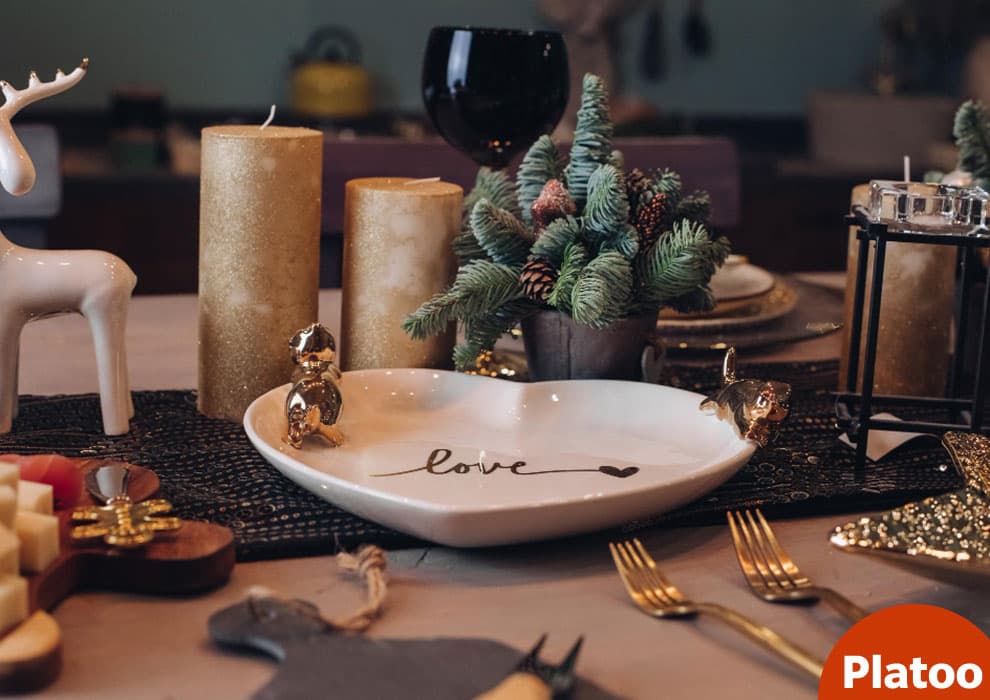
Picture a dining room on the first Friday of December. The lights in the window look warm from the street. Inside, a garland runs along the bar, a candle flickers on every table, and a guest trying to set down a glass has to move a jar of pinecones first.
Nothing in that room is wrong on its own. The trouble is that each piece was chosen separately. Good Christmas decorations for restaurants come from a handful of decisions made in the right order, and most problems, from a cluttered table to a fire risk behind a curtain, trace back to a decision that was skipped.
This guide takes those decisions one at a time, in the order most operators meet them.
Key takeaways
- Choose one style first and check every purchase against it.
- Spend first on the spaces guests see first, and treat anything durable as a multi-year purchase rather than a one-season cost.
- Most restaurants do best by decorating in late November and keeping the decor up until Epiphany on 6 January.
- Fire safety decides what goes up, where it goes and how long it stays; on terraces and in windows, use CE-marked LED string lights rated IP44 at minimum outdoors.
- Snow, pine, warm light and citrus read as festive to almost everyone, while overtly religious symbols speak to only part of the room.
Christmas Decorations for Restaurants: Pick a Style Before You Buy
Festive decor rarely goes wrong on the walls. It goes wrong at the shop counter. One person buys red baubles, another adds gold tinsel, a supplier drops off a free poinsettia, and by mid-December the dining room looks like three different venues.
Christmas decorations for restaurants work best when one style is chosen first and every purchase is checked against it. Before anything goes into the basket, ask one question: does this fit? That habit shapes the atmosphere guests remember and stops the budget leaking into items that never quite belong.
Which Christmas decor style suits your restaurant?
The right style is usually the one that extends what the room already is. Classic decor sits comfortably in traditional interiors with dark wood and white tablecloths. Natural or Nordic decor suits light timber, stone and plants. A modern look belongs in minimalist spaces, where clutter would feel out of place.
| Aspect | Classic | Natural / Nordic |
|---|---|---|
| Palette | Red, green and gold | White, green and raw wood |
| Typical pieces | Garlands with baubles and ribbon, wreaths with bows, poinsettias | Pinecones and natural materials, dried citrus, greenery, plain wreaths |
| Suits | Traditional dining rooms, hotel restaurants | Cafés, wine bars, bright interiors |
| Watch out for | Looking crowded or dated | Looking sparse in a large room |
Modern decor takes a different route. It relies on one colour, a few strong shapes and lighting rather than many objects. A single oversized wreath or one run of metallic garland can carry the whole room.
Entrance, dining room, bar, terrace: decorate by zone
Give each zone one job instead of spreading the same decorations everywhere.
- Entrance. It sets the tone. A wreath on the door or a garland around the frame tells passers-by the season has started before they read the menu board.
- Dining room. Keep decor at eye level and above: walls, beams, shelves, window ledges. Guests stay here longest, so restraint matters more than volume.
- Bar. Here the theme can be tasted as well as seen. Winter glassware and seasonal cocktails garnished with cinnamon, rosemary or orange peel repeat the style without adding anything to the shelves.
- Terrace. It is often what the street sees first. Keep it in the same style as the inside, so the view from the pavement matches what guests find when they walk in.
How Much Should a Restaurant Spend on Christmas Decorations?
Spend most on the entrance and the dining room, and buy durable pieces to last several seasons. A sensible decoration budget starts with the spaces guests see first and treats anything durable as a multi-year purchase, not a one-season cost. The total then depends on two things: how many zones you decorate and how many winters each piece will last.
Most of the money goes on a few large items: the Christmas tree, garland and wreaths, and the lights that tie them together. Table pieces cost less in total, but guests see them up close.
The tree is the first real decision. A real tree is a cost you pay again every year, and it needs a spot away from heaters and a plan for disposal in January. An artificial tree costs more up front but comes back season after season, as long as you have somewhere dry to keep it. Often the deciding factor is not price but staff time.
A budget split by zone and venue size
Put most of the spend where guests linger or take photos, and the least where they only pass through. A small café may need nothing more than a dressed entrance and counter. A hotel restaurant usually has to carry one theme from the lobby to the terrace.
| Zone | What usually earns the spend | Small café or bistro | Larger restaurant or hotel |
|---|---|---|---|
| Entrance and windows | Wreath on the door, garland around the frame | Main priority | Main priority, matched to the façade |
| Dining room | One focal display or a tree | A single focal point | Tree plus garland along walls or beams |
| Bar and counter | Garland, small accents | Modest | Same style as the dining room |
| Tables | Low centrepieces, natural materials | Optional | Consistent across the room |
| Terrace | Outdoor-rated pieces only | Often skipped | Depends on winter trade |
Is it cheaper to rent, buy or DIY restaurant Christmas decor?
Buying is usually the cheapest route over several seasons. Renting suits venues that want a large display without storing it. DIY saves money mainly on small items and simple Christmas decorations for restaurants, such as table and shelf pieces.
Rental packages often include installation and removal, which spares your team the work, but the bill comes back every December. DIY works best for tables, shelves and windows: pinecones, dried citrus, fir branches and other natural materials look generous for little outlay, much like these simple DIY seasonal decorations for restaurants built for another holiday. The trade-off is labour, and fresh greenery rarely survives into a second year.
Whichever route you choose, count storage as part of the cost. A bought decoration only pays off if it comes out of the box intact next winter.
When Should a Restaurant Put Up and Take Down Christmas Decor?
Most restaurants do best by decorating in late November and keeping the decor up until Epiphany on 6 January. That window covers Advent, the busy weeks of group bookings and the New Year trade, without leaving tinsel up into a quiet January.
Late November to Advent: the installation window
Install in the last week of November. The room is then ready before Advent begins and before the first office parties arrive. Go much earlier and the decor can look tired by Christmas week. Go later and you are hanging garlands around full tables.
A sequence many venues follow:
- Check stored decor and replace anything damaged in the last week of November.
- Put up the larger pieces, such as trees, garlands and window displays, on a closed day or before opening.
- Add table-level details once the main room is finished.
- Keep everything in place through New Year’s Eve, then book the take-down for the first quiet day after Epiphany.
If you are also planning the end-of-year menu, our guide to New Year’s Eve menu ideas and prix fixe tips covers the trading side of those weeks.
Should decor stay up until 6 or 7 January?
For most venues, 6 January is the natural cut-off. Twelfth Night, the evening of 5 January, and Epiphany are often treated as the traditional end of the Christmas season and the moment decorations come down.
Your guests can move that date. Orthodox Christmas falls on 7 January for many believers who follow the Julian calendar, including the Serbian, Georgian, Russian and Macedonian churches. Ukraine moved its official Christmas to 25 December in 2023, though some Orthodox families still keep 7 January. A restaurant with a large Orthodox clientele can reasonably keep its decor up a day longer.
Some traditions treat Candlemas, on 2 February, as the latest date to remove decorations. For a working dining room, that is usually too long.
Fire Safety Rules for Festive Decor in a Restaurant
In December a dining room holds far more fuel than it does in March: paper garlands, fabric swags, dried foliage, extra cables and boxes of spare stock in the back. Fire safety of decorations is not a separate job from the decorating itself; it decides what goes up, where it goes and how long it stays.
In the UK, every business is legally required to carry out a fire risk assessment, and Buckinghamshire Fire and Rescue Service points out that it should be reviewed after significant changes such as a new layout or extra stock. A festive rearrangement of tables and a storeroom full of crackers both count. EU operators follow their own national rules, but the habit travels well.
The same fire service advises choosing flame-retardant decorations, using certified lights that an electrician inspects regularly, and switching decorations off when nobody is there to watch them. When buying fabric drapes or panels, ask the supplier for a fire classification for textiles, such as EN 13773 for curtains and drapes. For wall panels and other building materials, ask for a reaction-to-fire class under EN 13501-1, the European standard that grades them from A1 down to F. An unrated product is harder to justify to an inspector.
Are real Christmas trees allowed in restaurants?
Usually yes, as long as the tree is covered by your fire risk assessment and stands well away from heaters, exits and walkways. A real tree dries out in a heated room, so it needs regular watering and should come down once the needles start falling freely. An artificial tree avoids the drying problem, but check that the label says flame-retardant rather than assuming it does.
Are real candles safe on restaurant tables at Christmas?
They are the riskiest option on a busy floor. London Fire Brigade recommends LED tea lights instead of real candles and warns never to leave a candle unattended.
In a restaurant, that second rule is hard to keep. A server turns away, a guest drapes a scarf across the table, a menu leans against a holder. Candles and LED candles now look much alike, and in low light the difference is small.
If nobody can watch a candle for every minute it is lit, it belongs in a box, not on a table.
Keep exits, signs and alarms visible
Fire exits and escape routes must stay clear, unlocked and easy to open at all times during trading hours, including after seasonal displays go up. That rules out a tree in the corridor to the back door or a stack of gift hampers beside the side exit.
Fire services also warn against decorations covering fire signage, extinguishers, alarm call points or sounders. Tinsel looped over an exit sign, or a wreath hung on the call point by the bar, can slow down someone who needs them in a hurry. Once the decor is finished, walk the escape routes as a guest would and check that every sign and extinguisher is still in plain view.
Which Christmas Lights Are Safe for Terraces and Windows?
For a terrace or a window display, the safe choice is LED string lights that carry a CE marking and an ingress rating matched to where they will hang: IP44 at minimum outdoors, higher if they face open weather. Indoor-only sets belong inside, however sheltered the patio looks in November.
Windows sit in a grey zone. Lights hung on the inside of the glass are indoor products. A set wrapped around an outside frame or awning belongs with the outdoor Christmas decorations for restaurants and should be bought as outdoor equipment.
What CE marking does and does not tell you
CE marking tells you the manufacturer declares the lights meet EU rules. It does not tell you they suit your terrace.
According to the European Commission, the mark can be affixed only after the product has been tested and the conformity assessment required by EU harmonisation legislation is completed. For mains-powered decorative lights, that legislation is the Low Voltage Directive 2014/35/EU, which covers electrical equipment rated 50–1000 V AC and 75–1500 V DC.
Since 13 December 2024, the General Product Safety Regulation (EU) 2023/988 has also applied, replacing the General Product Safety Directive 2001/95/EC, according to the Commission’s Access2Markets portal. Neither the mark nor the regulation says anything specific about rain, though. That is the job of the IP rating.
IP44 vs IP65: covered terrace or open street
IP44 is generally enough under a roof or awning; lights exposed to open weather are better served by IP65. The IP code comes from the IEC 60529 standard, and its two digits describe two kinds of protection. In IP44, the first 4 means protection against solid objects over 1 mm, and the second 4 means protection against water splashed from any direction, which suits covered outdoor areas. IP65 means dust-tight and protected against water jets, the safer pick for fully exposed lights.
| Aspect | IP44 | IP65 |
|---|---|---|
| Solid objects | Protected against objects over 1 mm | Dust-tight |
| Water | Splashes from any direction | Water jets |
| Typical placement | Covered terrace, awning, sheltered entrance | Open terrace, street-facing facade, uncovered trees |
Check the rating on the plug, transformer and connectors as well as the string itself. Weatherproof lights plugged into an indoor extension lead are only as protected as that lead.
How Much Do Restaurant Christmas Lights Cost to Run?
With LED string lights, the electricity cost of festive lighting is close to negligible; with old incandescent strands, it is not. According to the US Department of Energy, LED holiday light strands use about 70% less energy than conventional incandescent strands, so the type of bulb matters more than the number of strands.
The DOE also puts a figure on it. Lighting a 6-foot tree 12 hours a day for 40 days costs about $0.27 with LEDs, compared with roughly $10 with incandescent lights, at US prices. A restaurant lighting a window, a bar and a terrace repeats that gap several times over.
70% less energy
LED holiday strands vs incandescent
US Department of Energy
$0.27 vs $10
One 6-foot tree, 12 hours a day for 40 days, at US prices
US DOE estimate
92% less energy
ENERGY STAR certified decorative LED strings vs incandescent (a separate measurement from the DOE figure)
ENERGY STAR
Up to 10 times longer
Lifespan of certified LED strings
ENERGY STAR
LED vs incandescent: energy, heat and lifespan
LEDs come out ahead on all three counts. According to ENERGY STAR, certified decorative LED light strings use approximately 92% less energy than incandescent strings and can last up to 10 times longer.
Heat is the less obvious saving. ENERGY STAR notes that certified LED strings stay cool to the touch, which lowers fire risk compared with incandescent bulbs. That matters near curtains, garlands and coats on hooks.
Longer life also means fewer strands to replace mid-season, when a dead section above the bar is awkward to fix during service.
Christmas Table Decor That Leaves Room for the Plates
A table that looks lovely when empty can become a problem the moment a starter, a bread basket and three glasses arrive. Good Christmas table decorations are planned around service: plates, drinks and the server’s reach come first, and the festive touches fill whatever space is left.
Set one table fully, with plates, glasses and the planned decor, before buying anything else: most Christmas table decorations for restaurants look different once service starts.
The room’s style should carry through to the table without crowding it. A classic scheme might mean a sprig of holly and a red napkin. A natural or Nordic look works with a few pinecones, dried orange slices or a small cutting of fir. A modern setting can rely on a single metallic accent. A potted poinsettia looks generous on a host stand or a windowsill, but it is bulky and better kept off dining tables.
How big should a Christmas table centrepiece be?
Small, and low enough for guests to see and talk over it. A centrepiece that blocks eye contact gets pushed aside within minutes, and one that spreads wide steals space from sharing plates. Narrow runners, single jars or compact arrangements that a server can lift with one hand are easier to live with than long garlands.
Candles are the obvious centrepiece, and the riskiest one, for the reasons set out in the fire-safety section above. Battery-powered LED candles give much of the same warm glow and can stay lit through a long service.
Typical scenario
A bistro places a small glass jar of pinecones with a warm LED candle on each two-top. A server clearing plates moves the jar to the window ledge, then brings it back with dessert. Nothing spills, nothing burns, and the table is reset in seconds.
Scent, glitter and loose petals near food
Keep them away from the plate. Scented candles and diffusers compete with the aroma of the food and can bother guests who are sensitive to strong smells. Glitter and loose petals travel: they end up in sauces, glasses and bread baskets, and guests notice. Unscented decor, fixed embellishments and materials that wipe clean between sittings are the safer choice.
How Do You Decorate for Guests Who Don’t Celebrate Christmas?
Lean on winter rather than the nativity. Snow, pine, warm light and citrus read as festive to almost everyone, while overtly religious symbols speak to only part of the room. That balance matters most in tourist areas, where one evening’s covers can span several faiths and calendars.
The aim is a room that feels seasonal without asking guests to sign up to a particular holiday. A Christmas tree sits in the middle ground: many non-Christian visitors see it as a winter custom rather than a devotional object. So the choice between a real and an artificial tree is mostly about scent and upkeep here, not about who it includes.
Winter-festive vs religious symbols
Most guests are comfortable with decor that marks the season; fewer are comfortable with decor that marks a faith. Sorting your boxes into those two groups before you hang anything makes each later call easier.
| Reads as winter-festive | Reads as religious |
|---|---|
| Pine branches, cones, dried oranges | Nativity scenes |
| Warm white lights, candles in jars | Angels and crosses |
| Snowflakes, plain stars | Scripture or carol lyrics on signs |
| A decorated Christmas tree | Figures of saints and icons |
Calendars matter too: for many Orthodox guests, Christmas falls on 7 January. Keeping neutral winter decor up into early January quietly includes those guests. The same thinking suits any venue that plans around seasonal crowds, from a city-centre bistro to someone running a restaurant stall at a Christmas market.
How do you create a Christmas photo spot guests share?
Give it one clear backdrop, good light and a place where nobody blocks the service route. A wall of greenery, a lit arch or the tree itself works if a guest can stand in front of it without leaning over someone’s table.
Light the face, not just the decor: a warm lamp at head height does more than a string of fairy lights behind someone. Keep the backdrop free of religious imagery so the photo suits any feed, and add your venue’s name discreetly so shared pictures carry it. Test the spot with a phone after dark, when most guests will take theirs.
Match the Festive Menu and Table Tents to the Decor
A room dressed in pine and warm lights loses some of its effect when guests open a menu still printed for autumn. The menu is the one piece of decor every guest holds. When the menu, the table tents and the Christmas table decorations share one colour palette and one typeface, the room reads as planned rather than patched together.
Small touches carry the theme: a sprig motif on festive menu cards, a red or green border on QR table tents. Keep the tent clear of the centrepiece so the code stays easy to scan; the usual advice on where to place QR codes on restaurant tables applies in December as much as in July.
Can a QR menu switch to a festive menu without reprinting?
Yes, as long as the code points to a fixed menu address rather than a single file. In Platoo, for example, venues can prepare several menus in advance and switch to the right one when needed. Changes to prices and dishes go live straight away, and the printed QR code stays the same.
To see what guests get after the scan, open an example menu, no sign-up needed.
- Build the Christmas menu as a separate menu a few weeks before the decor goes up.
- Check prices, allergens and set-menu descriptions with the kitchen.
- Switch it on the day the dining room is decorated.
- Switch back to the regular menu once the season ends.
Clear headings help guests find the festive dishes; more on updating a seasonal menu without confusing guests.
Storing and Reusing Christmas Decorations for Restaurants
Most of what goes up in December can come back next year, if it is packed with the same care it was hung with. The cheapest Christmas decorations for restaurants are the ones bought once and stored well. That logic starts with the tree.
According to the Polish Investment and Trade Agency, an artificial tree carries a footprint of about 40 kg of CO2, against around 3.1 kg for a real one, so it has to be reused for 10–15 years to break even. The same source notes that China supplies over 80% of artificial trees on the global market, while Denmark leads Europe’s exports of real ones. Europe bought around 60 million real trees in 2022, up 2% on 2021.
What to keep, recycle or compost after January
Keep anything durable, recycle anything broken and compost anything that grew. A real tree belongs in municipal green-waste collection, not a general skip. An artificial tree, garlands and LED string lights earn back their cost only if they survive the trip to the storeroom.
- Test every set of Christmas lights before packing, and discard strands with cracked bulbs or frayed cables.
- Wind LED string lights around a piece of card so they do not tangle.
- Dismantle the artificial tree tier by tier and store it in a labelled, dry box.
- Wrap glass ornaments individually and list what you have, so next year’s order covers only the gaps.
- Send the real tree, wreaths and natural greenery to compost or green-waste collection.
Related reading
Frequently Asked Questions
Reusable basics give the most effect for the least money: warm-white LED strings, greenery and a few repeated colours. Buy plain pieces that will work for several winters, skip trend items that date quickly, and spend on one focal point, such as the entrance or the bar, rather than scattering small items everywhere.
In practice, yes. UK fire and rescue services advise businesses to use flame-retardant decorations and to review their fire risk assessment after significant changes. Check labels for flame-retardant treatment, keep paper and fabric away from lights and heaters, and never let garlands cover exit signs, extinguishers or alarm call points.
You can, but LED candles are the safer choice on a busy floor. If you keep real ones, use stable, enclosed holders, place them well away from napkins, garlands and coats, never leave them burning in an empty room, and make one member of staff responsible for lighting and putting them out.
IP44 at minimum, and IP65 for lights in open weather. An IP44 rating, which protects against water splashed from any direction, is generally suitable under awnings and on covered terraces. Lights facing rain, sleet and wind directly need IP65, which is dust-tight and resists water jets. In the EU, also check mains-powered sets carry CE marking.
Most venues take them down in the first week of January. Twelfth Night and Epiphany on 6 January traditionally close the season, though restaurants with many Orthodox guests often keep decor up until 7 January, and some traditions allow until Candlemas on 2 February. Schedule removal for a quiet shift so it does not disrupt service.
It depends on how long you will keep it. A real tree has the lower carbon footprint unless an artificial one is reused for a decade or more. A real tree needs daily watering and must stay away from heaters, while a flame-retardant artificial tree needs dry storage space but comes back every December.