
Drinks Menu Template: How to Structure a Bar Menu
Use this drinks menu template to structure wine, beer, cocktails, spirits and alcohol-free drinks, with serving sizes, allergens and EU pricing rules.
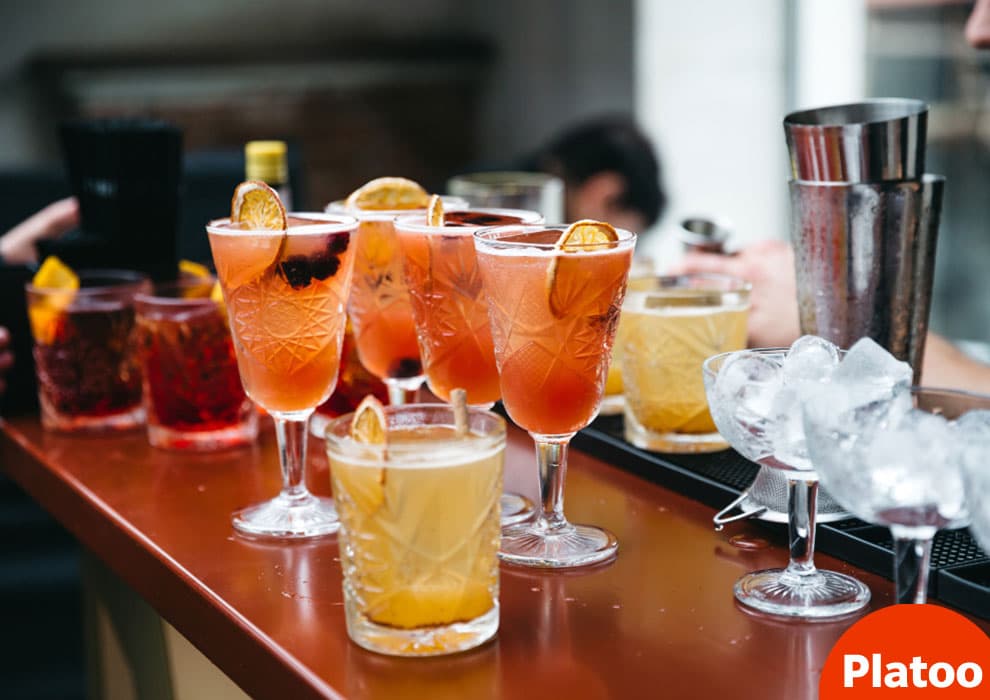
Typical scenario: a couple sit down at a bar on a busy square in a coastal town. The wine list shows two prices beside each name and no hint of what either one buys. The cocktail page names a drink after the house and lists no ingredients. The server is too busy to explain. They order the beers they already know and leave after one round.
Nothing on that menu was false. It left questions unanswered, and when guests can’t answer a question quickly, they fall back on the safe choice.
A drinks menu template prevents that. It gives every drink the same set of facts and every section a fixed place on the page, so the questions are answered before anyone has to ask. Most drinks menus go wrong in the same few places: unclear serving sizes, missing ingredients, sections that wander and prices guests have to work out for themselves.
Key takeaways
- Give every entry on the drinks menu the same core facts, and the list stays readable however many wines, beers and cocktails you add over time.
- Lead with signature cocktails and other high-margin drinks, then let the staples follow in a sequence guests can predict without searching the page.
- Print the serving size above every glass price, so guests can compare wine by the glass with wine by the bottle and see what each price buys.
- Each drink line carries different information: beer sells on style and size, cocktails on flavour, and spirits on category, age and pour.
- In most of Europe, a bar menu has to show what each drink costs and how much the guest gets, and allergen information has to be available, on the menu or, where national rules allow, verbally.
What Should a Drinks Menu Template Include?
A drinks menu template should give every drink the same fields and group those lines into sections that match how guests choose. If every entry carries the same six facts, the drinks menu stays readable however long it grows.
The reason is comparison. A guest choosing between two wines looks across the lines for the difference that matters: size, price, style. When one line shows a glass size and the next doesn’t, the comparison breaks. The logic mirrors what every restaurant menu template must include, but drinks add pour sizes and alcohol content.
The six fields every drink line needs
Each line needs six fields: a name, a serving size (pour size), drink prices per size, short drink descriptions, the alcohol by volume (ABV) and allergens.
Some fields are set by law, such as small measures and price lists, covered in the legal section below. Strength is optional for poured drinks; allergens, such as sulphites in wine, are not.
Illustrative example
| Field | What it holds | Example |
|---|---|---|
| Name | What guests ask for | Rhubarb G&T |
| Serving size | Every measure sold | Glass, carafe, bottle |
| Price | One price per measure | Shown beside each size |
| Description | Base, flavour, garnish | Gin, rhubarb, tonic, lime |
| ABV | Strength in % | Useful for beer and spirits |
| Allergens | Declared allergens | Sulphites, gluten, milk |
Which sections does a bar menu need?
A bar menu needs one section per drink type guests look for: cocktails, beer and cider, wine, spirits, non-alcoholic drinks and, for daytime trade, hot drinks (coffee and tea). Soft drinks and mineral water deserve their own block, not a spot under mixers.
Keep menu sections and categories shallow. One level of headings is enough for most bars; add sub-categories such as red and white only where a list runs long. Each extra level is one more step before a drink.
Adapting the template to a café, a wine bar or a hotel bar
The fields stay the same; what changes is which one works hardest. In a café, hot drinks lead and milk alternatives make the allergen field the busiest. A wine bar widens the serving size column and uses descriptions for grape and region. Hotel bars work best from one master list, with each outlet, down to room service, showing only its own sections.
How Should You Order the Sections of a Bar Menu?
Order a bar menu by what you most want guests to choose, then by the way people tend to drink through an evening. Put your signature cocktails and other high-margin drinks first, and let the staples follow in a predictable sequence.
The opening section tends to get the closest reading, while the rest is scanned for something specific, so a guest looking for a beer should know roughly where to find it.
Start with the drinks you most want to sell
Menu engineering starts with pour cost: what the ingredients in one serve cost you. A cocktail built on a house spirit can cost less per serve than a premium bottled beer, yet it carries a higher price because the recipe is yours.
That makes signature cocktails the natural opening of the cocktail menu, with seasonal drinks and specials beside them so regulars notice what has changed.
A sequence that suits most bars:
- Signature cocktails and seasonal specials
- Classic cocktails
- Wine list, by the glass first
- Beer and cider, draught before bottled
- Spirits, grouped by type
- Non-alcoholic drinks and mocktails
- Hot drinks and soft drinks
A wine bar would move the wine list to the top; a craft beer pub would lead with its taps. The order follows the venue, not a fixed rule.
Should drinks go on the food menu or a separate card?
If you serve more than a short list of drinks, give them a separate card. You can change the wine list or swap seasonal cocktails without reprinting the food menu.
A combined menu still makes sense for a café or small bistro where drinks play a supporting role. Put them on the last page or a clearly labelled panel, so guests know where to look once they have chosen their food.
How many drinks should each section hold?
Few enough to scan at a glance: as a rule of thumb, six to eight cocktails is easier to read than twenty. Long lists slow decisions and push guests back to the drink they always order.
The guidance on how many categories and items a menu should carry holds for drinks as much as for food. If one section keeps growing, split it, for example into gin-based and whisky-based cocktails, rather than letting a single block fill a page. When seasonal drinks come in, retire the slowest sellers.
How Do You List Wine by the Glass and by the Bottle?
Give each wine one line, with glass and bottle prices in columns side by side. Print the serving size above every glass price: guests compare wine by the glass with wine by the bottle at a glance and need to know what each price buys.
The same price can be fair for a large glass and steep for a small one; a size in the column header settles that for the whole list.
Glass sizes, carafes and bottles on one line
In the UK, weights and measures law on specified quantities fixes glass sizes for still and fortified wine but not for sparkling wine, so the flute size for sparkling wine and champagne is the venue’s call.
Germany allows commercial pouring only in set nominal volumes under § 27 Mess- und Eichverordnung (MessEV); the legal section below covers the measures.
Illustrative example
| Wine | Glass 125 ml | Glass 175 ml | Carafe 500 ml | Bottle 750 ml |
|---|---|---|---|---|
| House white — Verdejo, Rueda, 2024 | €5.00 | €6.80 | €18.00 | €25.00 |
| Albariño, Rías Baixas, 2023 | €6.50 | €8.80 | — | €34.00 |
| Crémant d’Alsace, NV | €8.00 | — | — | €39.00 |
| Rioja Reserva, 2019 | — | — | — | €46.00 |
The house wine is usually the one worth offering by the carafe.
Should a wine list be grouped by colour, style or region?
For most venues, group by colour and style: sparkling, white, rosé, red, then sweet and fortified. Region works better as a second layer within each colour, or as the main structure for long lists aimed at connoisseurs.
Within each group, order wines from lightest to fullest or by drink prices, and stick to one logic.
For style notes, the WSET Level 2 Systematic Approach to Tasting Wine (Issue 2, 2023) describes wine on the palate by sweetness, acidity, tannin, alcohol, body, flavour intensity and finish. Those terms keep descriptors useful: “dry, crisp, light-bodied” tells a guest something, “delightful” doesn’t.
Grape, region and vintage: the details guests actually use
Many guests don’t recognise producers, so they navigate by grape varietal first. Region is the second clue. Vintage matters mostly to bottle buyers.
Keep all three in the same order on every line. Update the vintage when stock changes: a list that says 2022 while the bottle says 2023 invites an awkward conversation at the table. Mark non-vintage sparkling wine NV.
Beer, Cocktails and Spirits: What Each Drink Line Needs
Guests choose beer, cocktails and spirits quickly, but on different details. Beer sells on style and size, cocktails on flavour, and spirits on category, age and pour, so each line on the menu has to carry different information.
How should beer be listed on a drinks menu?
Give each beer its name, beer style, brewery and origin, alcohol by volume (ABV), and the serving size next to the price. Split the beer list into draught and bottled, since the two come in different measures.
UK and German law fix the legal measures for draught beer (see the legal section), so print the volume, not “small” or “large”: one bar’s small is another’s large.
How do you write a cocktail description guests can order from?
Name the base spirit, two or three key ingredients and the flavour profile in one line, the same discipline as writing dish descriptions that sell. Mention glassware or garnish only when it changes what arrives.
“Our twist on a timeless classic” asks the guest to trust you. “Gin, Campari, sweet vermouth; bitter and dry, served short over ice” lets them decide, and does the server’s job before the server arrives.
In a cocktail drinks menu template, keep signature cocktails apart from classic cocktails. Guests who want a Negroni, Daiquiri, Martini, Old Fashioned or Spritz scan for names they already know. Signature drinks need fuller drink descriptions, because nobody recognises them yet.
Allergens are simpler than they look: grain-based spirits are exempt from the gluten entry (see the legal section), so what needs checking is everything else in the glass, from liqueurs to syrups.
Spirits: legal category names, age statements and pour sizes
A spirits list reads best grouped by category, with brand, origin, any age statement, pour size and price on each line.
In the EU, category names carry legal weight. Regulation (EU) 2019/787, Annex I sets a minimum alcoholic strength by volume of 37.5% for rum, vodka and gin (including London gin), 40% for whisky and 15% for liqueur. A weaker bottle belongs under another heading. Copy age statements exactly as they appear on the label.
Side by side:
| Detail | Beer | Cocktails | Spirits |
|---|---|---|---|
| Guests choose by | Style and size | Flavour | Category, age and pour |
| Size or pour to show | Volume, e.g. half a pint or 0.5 l | Glass or serve, only if it changes what arrives | Pour size on every line |
| Description focus | Style, brewery, origin | Base spirit, two or three key ingredients, flavour | Brand, origin, age statement as on the label |
| ABV | On every line | Optional | Legal minimum by category, e.g. 37.5% gin, 40% whisky |
| Allergen to check | Isinglass finings are exempt | Every non-spirit ingredient | Grain, whey and nuts in distillates are exempt |
Print the pour size on every spirits line, not once at the top of the page.
Non-Alcoholic and Low-ABV Drinks Deserve Their Own Section
Non-alcoholic drinks and mocktails earn a named section of their own, not a line at the bottom of the soft drinks. A guest who isn’t drinking should find a real choice as fast as anyone else.
How many guests skip alcohol altogether?
A sizeable minority. According to Eurostat’s European Health Interview Survey (2019), 26.2% of EU adults had never drunk alcohol or had not drunk in the previous 12 months, while 8.4% drank daily.
Yet WHO figures released in July 2024 put average adult consumption in the WHO European Region at 9.2 litres of pure alcohol a year, the highest of any region.
26.2%
EU adults not drinking in the previous 12 months
Eurostat, 2019
8.4%
EU adults who drank daily
Eurostat, 2019
9.2 litres
pure alcohol per adult per year in the WHO European Region
WHO, 2024
Alcohol-free, de-alcoholised, low-ABV: what the labels mean
For wine, the wording is fixed in law. Under Regulation (EU) 2021/2117, wine with an actual alcoholic strength of no more than 0.5% by volume is ‘de-alcoholised’, and wine above 0.5% but below its category’s minimum strength is ‘partially de-alcoholised’. Copy the term from the bottle.
Low-ABV drinks have no single legal definition, so print the alcohol by volume (ABV) beside each one. The figure is what lets a guest compare a low-ABV spritz with a regular one.
A workable order: de-alcoholised wine and alcohol-free beer, then low-ABV drinks, then mocktails, then soft drinks and mineral water.
Where non-alcoholic options are a legal requirement
In Germany, § 6 Gaststättengesetz requires venues licensed to serve alcohol to serve non-alcoholic drinks on request and to price at least one of them no higher than the cheapest alcoholic drink, compared per litre. Some Länder have their own version. Do the per-litre maths before you print: a cheap small bottle can still cost more per litre than the house beer.
In France, Article L3323-1 of the Code de la santé publique requires every drinking establishment to keep a display of at least ten bottles or containers of non-alcoholic drinks, separate from the alcoholic ones. Fines reach €750 for an individual and €3,750 for a company. Confirm the details with your national licensing authority.
What Must a Drinks Menu Show by Law in the EU and UK?
In most of Europe, a bar menu has to tell guests what each drink costs and how much of it they get, and allergen information has to be available, on the menu or, where national rules allow, verbally. The details differ by country, and rules change, so confirm the current wording with your national trading standards or consumer authority.
Do you have to show serving sizes next to drink prices?
Yes, for the core drinks. The mandatory licensing conditions in England and Wales under the Licensing Act 2003 (SI 2014/2440, para. 4) require on-trade premises to offer, and display on a menu or price list, small measures: ½ pint of beer or cider, 25 ml or 35 ml of gin, rum, vodka or whisky, and 125 ml of still wine in a glass.
UK weights and measures law and Germany’s § 27 MessEV also limit which pour sizes are legal at all (see the table). Germany’s § 13 PAngV requires drink prices in a price list guests see before ordering, plus the main items posted by the entrance. France has its own display rules, covered under pricing below.
| Drink | UK specified quantities | Fitting volumes under Germany’s § 27 MessEV |
|---|---|---|
| Gin, rum, vodka, whisky | 25 ml or 35 ml and multiples, not both on one premises | 2 cl, 4 cl |
| Still wine by the glass | 125 ml, 175 ml or multiples | 0.1, 0.15, 0.2 l |
| Port, sherry, fortified wine | 50 ml, 70 ml or multiples | 5 cl, 10 cl |
| Draught beer and cider | ⅓, ½ or ⅔ pint; multiples of ½ pint | 0.3, 0.4, 0.5 l |
Alcohol by volume (ABV) is a different matter. Regulation (EU) No 1169/2011 makes actual alcoholic strength compulsory on prepacked beverages above 1.2% under Article 9(1)(k), but Article 44 does not extend this to drinks poured at the bar. Printing it still helps guests choose.
Which allergens apply to wine, beer and cocktails?
Drinks served at the bar need allergen information just like dishes, and for wine, sulphites matter most. Article 44(1)(a) of Regulation (EU) No 1169/2011 makes allergen particulars mandatory for non-prepacked food and drink, and Annex II point 12 lists sulphur dioxide and sulphites above 10 mg/kg or 10 mg/litre as total SO2.
Some exemptions narrow the list. Cereals, whey and nuts used to make alcoholic distillates are excluded from the gluten, milk and nut entries (Annex II points 1(d), 7(a) and 8), and fish gelatine or isinglass used to fine beer and wine is excluded from the fish entry (point 4(b)).
Cocktails still need checking ingredient by ingredient. See the 14 EU allergens and where they hide in drinks, and plan allergen marking for every item in a digital menu.
Are happy hours allowed everywhere in Europe?
No. Ireland effectively bans them: under the Public Health (Alcohol) Act 2018 s. 23 and S.I. No. 4/2020, from 11 January 2021 alcohol may not be sold for 3 days or less below the price charged the day before, and advertising such sales is banned too.
France permits a happy hour, but Article L3323-1 of the Code de la santé publique requires non-alcoholic drinks to be discounted during the same period. Germany is lighter on presentation: § 13(1) PAngV exempts restaurants from the § 11 rule on quoting the previous lowest price.
Pricing and Layout: Making a Drinks Menu Easy to Read
Guests scan a drinks list for a category, a name and a price, often while standing at the bar. A drinks menu works when a guest can find a drink and its full price in a few seconds, without decoding the page.
Most menu layout and design choices follow from that test, and you can run it: hand the menu to someone new, name a drink and see where they hesitate.
One price column, one currency rule
Keep drink prices in one right-hand column, aligned so the eye can run straight down it. Pick one format, “7.50” or “€7.50”, and never mix them. Where a wine comes by the glass and by the bottle, give each serving its own column with the size in the header.
The price shown should be the price paid. In Germany, § 13(5) PAngV requires prices in restaurant price lists to include the service charge (Bedienungsgeld) and all other surcharges. In France, the arrêté of 27 March 1987 (amended 29 June 1990) requires drinking establishments to display the full drinks list with prices inside, and outside the prices of the most commonly served drinks, such as a demi of draught beer, with serving sizes, in letters and figures at least 1.5 cm high. Check current rules with your national authority before printing.
Position does the rest. A premium bottle at the top of the list works as price anchoring: it sets a reference point that makes the next wine by the glass look reasonable. Menu engineering then puts high-margin drinks with a low pour cost where the eye lands first. The pricing formulas, price anchors and happy-hour maths are covered separately. On the page, show happy hour as one timed block rather than crossing out prices line by line.
The price shown should be the price paid.
Should a drinks menu have photos?
Usually only a few. Drink photos help with signature cocktails and anything a guest can’t picture from the name. A photo beside every beer, though, turns a list into a catalogue. Short drink descriptions (base spirit, two flavour notes, serving size) do more work per centimetre.
Table tents, boards and back-bar displays
Table tents and menu boards suit whatever changes: a guest beer, a seasonal spritz, the happy hour window. Match the main list’s names and prices exactly. Write boards for reading across the room: fewer items, larger type. A back-bar display can carry part of the spirits list, as long as prices sit where guests look.
From Drinks Menu Template to a Menu That Stays Current
A drinks menu template gets the structure right on day one, but a bar list changes faster than most menus. Vintages run out, cocktails turn over with the seasons and happy-hour prices apply for only part of the evening. A drinks menu stays useful only if each change reaches guests on the night it happens.
Sold-out vintages, seasonal lists and happy-hour prices
On paper, every change means a reprint or a crossed-out wine list. A digital drinks menu (QR code menu) removes that step: a bottle that sells out mid-service disappears before the next table scans, and seasonal drinks and specials can be prepared in advance.
Typical scenario
A wine bar pours its last bottle of Chablis on a busy Friday. With a printed list, staff apologise all night. With a digital one, the manager hides the wine from a phone and shows it again when the next case arrives.
How do you translate cocktail names for tourists?
Keep the original cocktail name and add a short translated description underneath: base spirit, main flavours and strength. The name is part of the bar’s identity; the description is what helps a guest choose.
UN Tourism’s World Tourism Barometer estimates 1.52 billion international tourist arrivals in 2025, up 4% on 2024, with Europe accounting for 793 million, 4% more than in 2024 and 6% above 2019.
Language shapes buying decisions too. In CSA Research’s “Can’t Read, Won’t Buy” study of 8,709 consumers in 29 countries, 76% of online shoppers preferred product information in their native language and 40% never bought from websites in other languages. That is online shopping, not bars, but a multilingual drinks menu answers the same hesitation.
Hotels and venues with several bars
Hotel bar and multi-outlet drinks menus share spirits and wines across a lobby bar, a rooftop and a pool bar, often at different prices. Keep one master template with shared descriptions and adjust prices per outlet, so a new vintage is updated once, not three times.
In a digital menu such as Platoo, for example, changes to prices and drinks go live straight away, and the printed QR code stays the same. A sold-out item can be hidden and shown again later, Platoo translates the menu automatically into the languages the venue enables, and every translation can be edited by hand. Several venues can be managed from one account, depending on the plan, and a single bar can start with a free digital menu plan for one venue.
Whatever format you use, the first step costs nothing. Take tonight’s list, check every line against the six fields, and fix the ones that leave a guest guessing.
Related reading
Frequently Asked Questions
Yes. A workable template is a fixed order of sections: signature and classic cocktails, wine, beer and cider, spirits, non-alcoholic drinks, then hot and soft drinks. Every line carries the same six fields: name, serving size, price in the venue’s currency, description, ABV and allergens. Build it once in a spreadsheet, then copy it for each venue or season.
In practice, very little: both list what a venue pours. “Drinks menu” is the broader term and also covers wine lists, coffee and soft drinks in restaurants and cafés. “Bar menu” usually means the list used in a bar, and in many venues it also includes the snacks and small plates served alongside the drinks.
No, not under EU food information rules for drinks poured in a bar; the requirement covers prepacked drinks. National rules can still differ, so check with your local authority before printing. Many bars list strength anyway, because guests use it to choose between, say, a light spritz and a stiff martini, and a printed figure answers that question.
There is no single EU standard. Each country sets its own measures: the UK sells still wine by the glass in 125 ml, 175 ml or multiples, while Germany’s MessEV permits spirit measures such as 2 cl and 4 cl. Whatever applies locally, print the size next to each price, so guests can see what they are paying for.
There is no fixed rule: the right number is what the bar team can make consistently on its busiest night. A short list of house signatures plus a few well-known classics is easier for guests to read and for the bar to stock, and it can grow later if guests keep asking for drinks that are not listed.
Every time something changes, and in full at least once a season. A new price, a different vintage or a spirit that has run out should reach the menu the same day. A seasonal review is the moment to swap cocktails and wines to match the weather, the produce and what actually sold.
Sources: GOV.UK — Weights and measures: specified quantities for alcohol · Mess- und Eichverordnung (MessEV), § 27 — serving measures · WSET Level 2 Systematic Approach to Tasting Wine (Issue 2, 2023) · Regulation (EU) 2019/787 on spirit drinks, Annex I · Eurostat — European Health Interview Survey (2019): alcohol consumption · WHO — Adults in the European Region consume on average 9.2 litres of pure alcohol a year (2024) · Regulation (EU) 2021/2117 (wine labelling and de-alcoholised wine) · Gaststättengesetz (GastG), § 6 · CCI Paris Île-de-France — Display obligations for drinking establishments · Licensing Act 2003 mandatory licensing conditions (SI 2014/2440) · Preisangabenverordnung (PAngV), § 13 · Regulation (EU) No 1169/2011 on the provision of food information to consumers · S.I. No. 4/2020 — Public Health (Alcohol) Act 2018 (Sale and Supply of Alcohol Products) Regulations 2020 · Assemblée nationale — Written question 16-4648QE on happy hours · UN Tourism — World Tourism Barometer, January 2026 · CSA Research — Can’t Read, Won’t Buy (2020)